Twitter 2016: How Tweets are Paving the Way to the White House and the Public

Whether or not you’ve been actively paying attention, I’m sure you’ve heard.

Primary results have been pouring in the past few weeks, and tensions have been building as the scope narrows to a select few fighting it out for a seat in the White House.

But how have you heard about Bernie vs. Hillary Tuesday night victories or the latest feud between Trump and Cruz (and Mrs. Cruz?) is changing from years before. With journalism transforming and news habits changing into something more than just a 6 o’clock sit-down, information is accessible at the snap of your fingers, anywhere at anytime. Journalism is being disrupted not only by candidates, but also by social media.

Trump isn’t running the election, but neither is Bernie.

The 2016 Race to the White House is being controlled by Twitter.

Barack_Obama_Hope_poster
Unlike any election before, this political brawl has been managed mostly via social media.
George W. Bush was big on the phone-push. Obama’s posters covered cities across the
nation, but today we see a major takeover on sites like
Twitter, Instagram, and Facebook (sometimes even Vine).


Now I would dare to say that the rise of Twitter is a more recent affair, but as of 2012, Obama had over 16 million followers and had sent nearly 5,000 tweets. Let’s get a look at today’s presidential hopefuls:

509579

Updated numbers show similar following, with Donald Trump far ahead and John Kasich eerily behind, but nonetheless Americans are taking notice of Twitter activity for announcements and victories. But how far is their reach, despite the numbers displayed at the top of their feed?

The Pew Research Center published a new study in August of 2015 after surveying a sample of the American public about their Twitter use:

FT_15.08.19_Twitter10


The Pew Research simply goes to show that a large sum of the American public are likely to be receiving their news from Twitter, among other mediums.

But how is Twitter transforming?

Without a doubt this campaign, twitter has been the social media bread winner when it came to sharing news, original content, or outright snide comments. While Instagram has jumped to be increasingly popular over Facebook, and Twitter has remained an unapologetically free platform, candidates have taken a turn for…maybe their true selves?

Recorded in August of 2015, Jeb Bush and Hillary Clinton went at it about education costs and reform:

bush graphic

jeb-hillary-hed-2015giphy (1)

Major clapback? I’d say so!

Personally speaking, I’d say it’s more than just an uprising in Twitter usage that’s making these kinds of remarks…acceptable, but maybe that’s just me.

In more recent months, we’ve seen more follower interaction, which I believe is driving the public away from the “imminent death of Twitter” that some might say is quickly approaching. Twitter, while not always guaranteeing a reply, does show a public record of your thoughts, feelings, opinions, and questions. This election, candidates have taken a turn to apparently really care about the American people, thus interacting with them on a semi-shallow platform.

With thousands upon thousands of tweets pouring into these candidates’ notifications every second, it can be hard to keep track of replying, I’m sure. But outspoken GOP candidate, Donald Trump, has taken to Twitter full force, without any political correctness as he so delightfully declares:


And finally- why is Twitter the future?

“As the 2012 elections show, social media is no longer the “exciting new frontier” for political campaigning. Social media is a normal and central form of communications with distinctly different properties than traditional mass media approaches. Obama has set the bar for future campaigns but social media and network structures should be given serious attention in the media strategy, whether it’s for politicians, organizations, brands or public service initiatives.”

Well… Dr. Pamela Rutledge sure has a point. Social media isn’t new. It’s not bright, shiny, or all that exciting until someone says something mildly offensive or racy.

But I must ask, how can social media not be new on a daily basis with over 320 million active monthly users world-wide, and roughly 65 million active monthly users in the US? News is changing, whether you hear it from your television as you sit and watch or see it on your phone as you bus to North Campus. The time is now to vamp up what we are already in the midst of- a social media revolution. Harness one of the world’s greatest marketing and outreaching tools is genius, especially during a campaign where we see those with the most followers have the most real life following in the polls.

http://www.cbsnews.com/common/video/cbsnews_video.swf

http://www.cbsnews.com/videos/social-medias-huge-role-in-the-2016-presidential-election/

And finally, we see the reach of social media globally, as candidates from other countries harness the media prowess inside. Country leaders in Brazil and Canada have found themselves using social media, similarly to how US presidential candidate use them- to communicate, criticize, and self-promote.

adhawk-election-social-media
Social Media Stats from recent Prime Minister election in Canada

“This presidential cycle is making clear the value Twitter has as a method of connecting candidates and voters,” says Gillian Branstetter of the Daily Dot. “It’s personal nature creates a perpetual town hall, in which a candidate can shine or crash at any moment. Regardless of whether Twitter can translate that into dollars, the rest of us will reap the rewards—and pay the price.”

Regardless of the rewards of consequences of receiving your news via social media, Twitter is the shorthand, tech talk of the 2016 election- have you joined in?

Shomari Stone- Wolverine in Washington DC

It all started with a follow.

NBC DC reporter- Shomari Stone followed me on Twitter.

I was confused as to why this man with about 50,000 Twitter followers would follow me. A Michigan alum with a renown name. An accomplished man, reporting on real issues. Someone I would consider to be almost famous, well-known, and even better connected, had followed me on Twitter.

barbara-walters-paul-rudd-kiss-gmaThis was especially exciting to me because for the longest time I had wanted to be a journalist, writing about the news, reporting the weather, blissfully drinking coffee in the early-morning hours with Paul Rudd on Good Morning America, but that’s besides the point.


Shomari is a reporter for News 4 in Washington DC, specializing in breaking news coverage of all topics, whether that’s politics, weather, disasters, or other breaking social events/issues. Going on year five with News 4, Stone has quite an impressive resume, from covering hurricanes, high magnitude earthquakes, bombings, shootings, and even an interview with Trayvon Martin’s parents.

But it wasn’t Shomari’s impressive coverage that attracted me to his reporting, but it was his personal brand on different forms of social media that I found absolutely riveting.

Upon coming to college, I was told to make my Facebook, Instagram, and Twitter accounts private, leaving no content up to question by future employers. But I found myself thinking that having a popular Twitter, thriving Instagram, and interesting Facebook would be helpful as someone who is planning on pursuing a career in social media and PR. I wanted my brand and my voice to be known.

And that’s what I really admire about Shomari Stone. His brand is real and evident

His Twitter is un-apologetically  his own. He has an original, yet thoughtful Vine account, photo-booth-holiday-party (25)-Lproviding 6-second videos of news and the happenings of his life. He has a YouTube portfolio of his work, along with a personal website, with all of his professional and personal accomplishments compiled into one place. While his work has earned him two
Emmy nominations, he remains grounded, often interacting with fans and followers on Twitter. His personal brand is evidently genuine to his true self, which is really refreshing when I’ve always assumed journalists on Twitter and other social media platforms to be singularly serious (which I’ve come to find isn’t always the case).

His voice is clear in his energized tweets about his favorite sports teams or the University of Michigan, but he also provides factual, shorthand reports on Twitter with a variety of cool media- videos, photos, etc.

Overall, his election coverage has been fairly unbiased, but quite extensive as he is in DC, IMG_9922where talk of the 2016 Race to the White House is on the minds of so many all the time.

I did attempt to reach out to Shomari on Twitter, but he is a busy man with lots of
messages and work to attend to I’m sure (I’ll be sure to update this post if he replies in a timely manner). But his brand of original yet informed is something that I strive to be, as I break out of my phase of tweeting things like this…

hqdefault

You can follow Shomari on Twitter here to keep updated on his adventures in DC, as well as his continual political coverage.

Drones > iPhones in the 2016 Election

Democratic Candidate For President Bernie Sanders Campaigns In IowaThe smartphone revolution changed politics forever. The easy access to information, while you walk to class, ride the bus, or simply skim your timeline during diner, has changed the way that we give and receive news.

Twitter gives tidbits of breaking news and information. Instagram provides stills of an action-packed world. Facebook is a compilation of it all.

But what kind of innovation technology is driving forward news and media in the 2016 election?

The answer- drones.528e84f6a1a8a24dce3cdf0ce2402638.jpg

Seemingly unimportant to the general public when it comes to reporting news, drones provide an omniscient-like look of activities with pictures and video of live events. Used in
various fields, such as sports, military, and delivery, drones are able to provide a point of view that those on the ground or at home don’t have readily available. In addition to providing exciting POVs, drones are the perfect way to safely receive footage from situations that aren’t necessarily safe.

While new drone technology has caused slight concern for security reasons, the benefits outweigh the risks. Aerial technology has the ability to capture moments in their purest form, giving angles and precision that just aren’t available via iPhone camera or even Nikon’s latest model.

As reported by The Guardian– “The Federal Aviation Authority (FAA) announced that it had entered into a new partnership with the cable channel under which CNN will be allowed to explore how drones can be safely used for news photography in populated areas. The federal agency’s administrator, Michael Huerta, told a conference of drone enthusiasts in Atlanta that the initiative would be a way to “help us anticipate and address the needs of the evolving UAS [unmanned aircraft systems] industry”.

This agreement has resulted in fantastic footage of campaign rallies, large crowds, and even other events happening internationally.

2012-obama-election

Beyond just the need for “that perfect shot”, drones have proven to be an interesting topic of conversation due to their sometimes-risky security endeavors. Any aerial vehicle has been reviewed as risky since 9/11, but the increasingly growing technology has some politicians worried around unlicensed or terrorist acts involving drones.

GOP nominee candidate John Kasich of Ohio says that he supports the use of targeted drone strikes, but believes that drone operations should be moved from CIA to the Pentagon.

On the other hand, Bernie Sanders, Democratic nominee candidate of Vermont, says he supports the limited use of targeted drone strikes, but believes that collateral damage, when it occurs, is detrimental to U.S. interests in the region.

The opinions differ when it comes to political drone endeavors, but the press all says the same- drones are the media of the future.

The Hands of a Hard-Working Student

This year, more than ever, millennials have been a key part of the 2016 Race to the White House. With this audience being targeted, issues that matter to students and young adults are being brought to the table.

-affordable/universal healthcare

-debt forgiveness

-free education

-access to resources

One of the more controversial of these is free education.

Students around the country can’t always afford to obtain a degree, which is sad in a time when a college education is required for jobs almost everywhere. This past week, I spent a week with LS&A sophomore- Anna.

Anna is an independent student, working hard in and outside of the classroom, to make her education worth while. I followed Anna after she got out of work this weekend, when she studied, cleaned her apartment, and did her laundry.

Here’s a glimpse inside the life of a student, where education is creating massive consequences and impending cringe-worthy amounts of debt:

IMG_8978
**portraiture**

IMG_8952

IMG_8959
**reenactment of recent text to mother**

IMG_8961

IMG_8983
Working for the university helps Anna afford her education.
IMG_8975
Anna spends her free time hanging out with friends and taking part in Kappa Alpha Pi, one of Michigan’s best pre-law fraternities.
IMG_9000
With law school in mind, Anna is trying to save money for LSAT classes and law school applications.
IMG_9025
Studying never ends, whether you’re in the library or at home.

IMG_9014

IMG_9035
Laundry before bed. Sleep is crucial when work starts early.

Anna is such a strong woman and student. When asked about the discussion of free education and student loan forgiveness, Anna says,”Free education would help make a degree achievable for any and everyone. This issue definitely helps determine my vote.”

Thank you Anna, for working hard to striving to create a successful future for yourself.


White House Stats…as of October 2016

O’Malley wasn’t even considered, Sanders stood no chance, and Trump was just beginning his reign of domination over the majority Republican vote. According to this data visualization of everything from candidate’s social media interactions to statistics about registered voters, there are clear indications of who has the best chance of claiming their seat in the Oval Office.

You can view the (very long, but interesting) data visualization here:

clevertap_5617387c122a8_w1500

Visually pleasing, informative, but honestly too long for my liking- this graphic did it’s job. Taking only about two minutes to read and understand, this data visualization captured everything you might need as you wait for the elevator and stand in line at the dining hall. As mentioned in Nieman’s The end of big (media), this is a piece that expands beyond just print media into multiple medias. Revolutionizing journalism can happen in many ways, but here we see a combination of news, stats, and graphics, all in one easy-to-read platform. I appreciate the time that this must’ve took, and I also love the numbers (what who doesn’t love numbers). It feels reliable, organized, and was easy to skim- even though I didn’t want to skim at all really. This data set looks awesome online, but I’m struggling to figure how it would look in print…my guess is not so hot.

I enjoyed the information in the data visualization (especially in regards to considered candidates’ social media use), but it was pretty long. Sure, you have to use a lot ofgiphy.gif space to include that much information, but I could’ve gone with a separate piece for voter statistics, a separate piece for social media engagement, a separate piece for people to fawn over Hillary Clinton. While I do think that I would rather browse this than a whole article from MSNBC or CNN, the length had me a little bored and asking “When does it end?” and “Ben Carson was actually considered as a suitable candidate?”.

With journalism reforming daily due to the “need” for digital media incorporation, I think that we will see an increased number of these data visualization things:

  1. Because people like numbers.
  2. Because they look really snazzy on a website.


It’s easy to see that these could be the future of last second reporting, as Illustrator is

Capture.PNGquick to learn and numbers are everywhere (I’m serious Google any stat, and the internet has your back).

Join us next time to keep up with the 2016 Race to the White House.

Raise Minimum Wage? A Question Sure to Start an Argument at the Dinner Table

Politics are rarely safe to bring up around the dinner table, let alone your circle of friends. From differing opinions to waivering stances, political conversations can be sticky.

Today we spoke with two passionate students from the University of Michigan in regards to the hot topic issue in the 2016 election- raising minimum wage. Join Max, head of Students for Rubio, and Rebecca, on leadership team for U of M’s Fight for 15, as we delve into an important issue for students and adults alike.

Thanks for listening! Join us next week and for the remainder of the semester as we continue to follow the race to the White House.

NPR One: Replacing My Spotify Obsession

I usually find myself running to class with headphones in my ear, Justin Bieber’s new album blasting as I embark on a journey of perpetual lateness to my Tuesday night class. But my Spotify days may now be over, thanks to the NPR One app. With easy to access npr-one-brings-the-best-of-us-public-broadcasting-to-ios-038-androidnews, stories, and interesting content, I can easily see NPR taking over my headphone time (but not necessarily my Netflix time).

Sunday afternoon I set out to listen to a mere one hour of content on NPR One, but found myself perusing the app for almost two. From local news to interest pieces to giddy discussions about Broadway and Twitter, the app was loaded with things I could learn from or enjoy without the junk or distractions that Facebook provides. It was nice receiving my news without having to scroll past 30 Conservative Tribune articles shared by my high school classmates.


During my hour of strong investigation, I found myself listening to the following stories:

In addition to these stories, news updates, or opinion pieces, I was able to catch the 6pm local and national news updates.

I was impressed by the engaging content presented on my feed, the sometimes funny/sometimes serious demeanor of the hosts, and way that I could easily multitask while gaining insight into daily happenings or social issues.

Overall, I’d give the NPR One app an A-.

Access: I could clean my room, eat lunch, do my laundry, drive the car. NPR One was easy to access and perfect for my busy, you-haven’t-done-anything-all-weekend Sundays. Unlike Netflix which glues me to the couch indefinitely, NPR One gave me the freedom to enjoy my entertainment while being productive in other facets of my life. In addition, you can easily transition stories if you aren’t satisfied with what you’re listening to.

Content: AWESOME. From credible sources to riveting conversation, the stories I listened
to held great relevance and content. I rarely found myself fast forwarding or skipping stories that were recommended. I was highly engaged, even excited. Maybe it was the isolation of my morning, but the stories sometimes felt like the in-depth conversations that I crave (which might not always be the topic of conversation in my daily interactions). I was able to indulge in news, social issues, and of course the Iowa Caucus- from the comfort of my bedroom to the Chipotle down the street.

Customization: Considering I’m interested in politics, gender, and international current events, the options presented to me upon opening the app were very pleasing! It didn’t take much (or any) customization at all- which was lucky because I was confused and couldn’t find or access any way to make my feed “Kate-friendly”. The more I listened to af33f27556c5b602221e56431d5463d4c67a9a9estories, the more I could dig into sources I enjoyed, but that defeats the purpose of listening to education news sources to become more informed. When I’m left on my own to dig and pick and choose my news- all of my sources are very biased towards my political, social, and economical views. I like customization, but I also sometimes enjoy the views of others being presented regularly (with reason).

Relevance: Race issues, gender gap, the Flint Water Crisis. NPR local and national news was making sure I knew what was going on. As a feminist I’m interested in stories that revolve around the advancement of all women. As an ally, I’m eager to hear about advancements in social and political realms regarding safety and equality. As a Michigander, I being educated about the rallies, movements, and fixes regarding the devastation that the citizens of Flint are suffering. NPR is an outlet that I could trust to give me accurate information about important things.

While NPR One doesn’t let me binge on Friends reruns for hours, it does help me be a bit more productive and a lot more educated. My running-to-class-Justin-Bieber-playlist days are over. Bye bye Spotify. I would surely recommend NPR One to a friend.

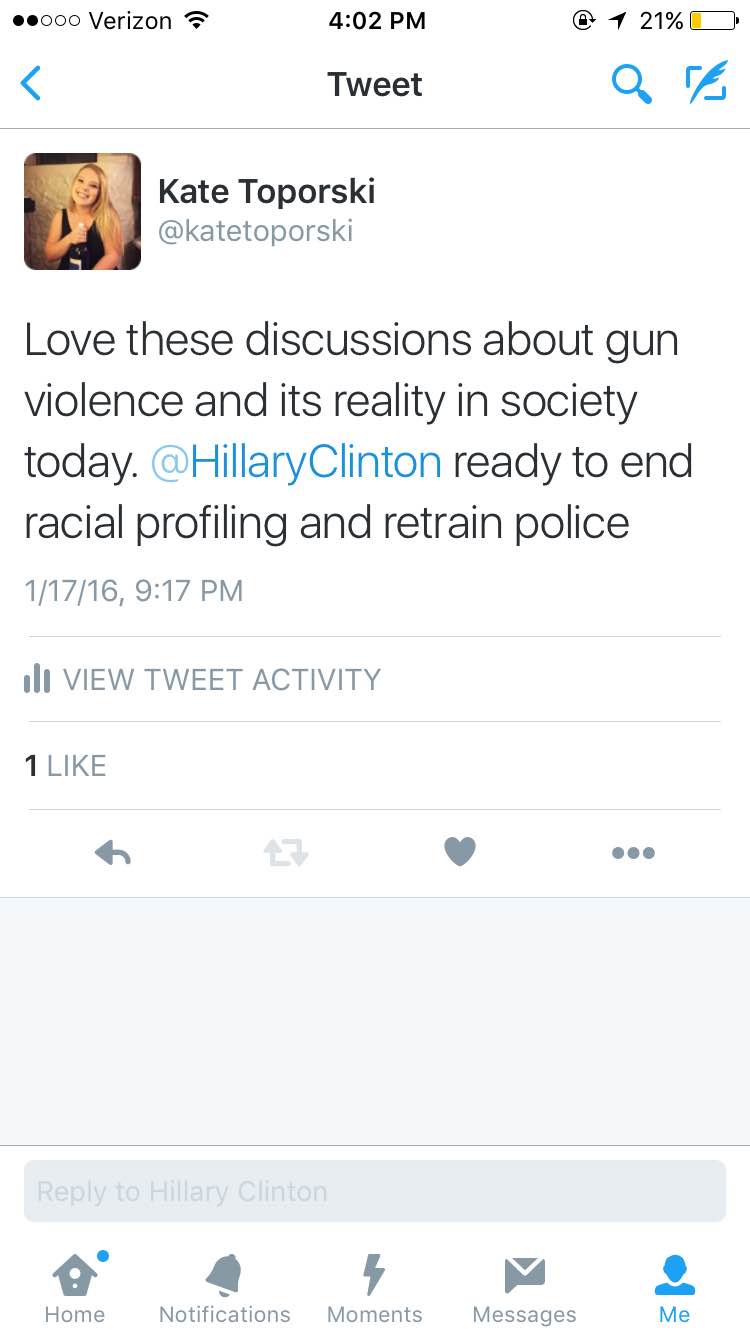
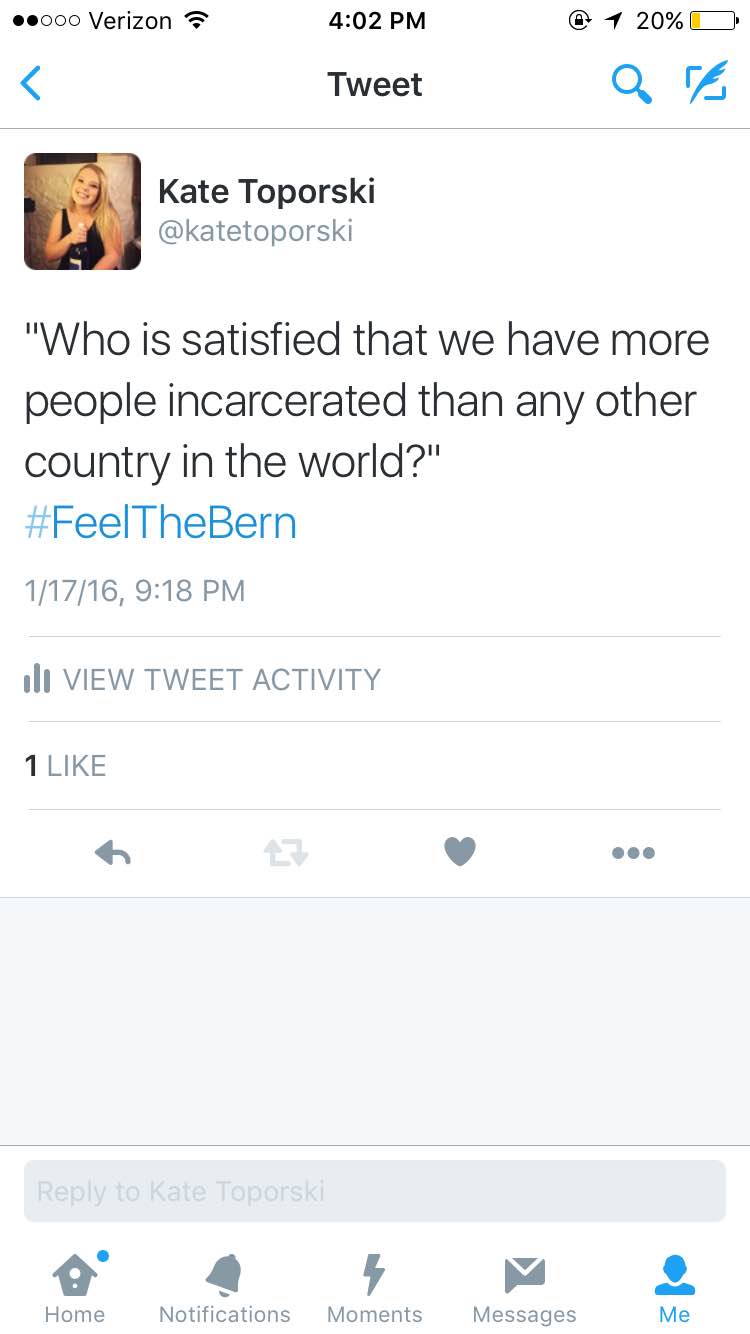
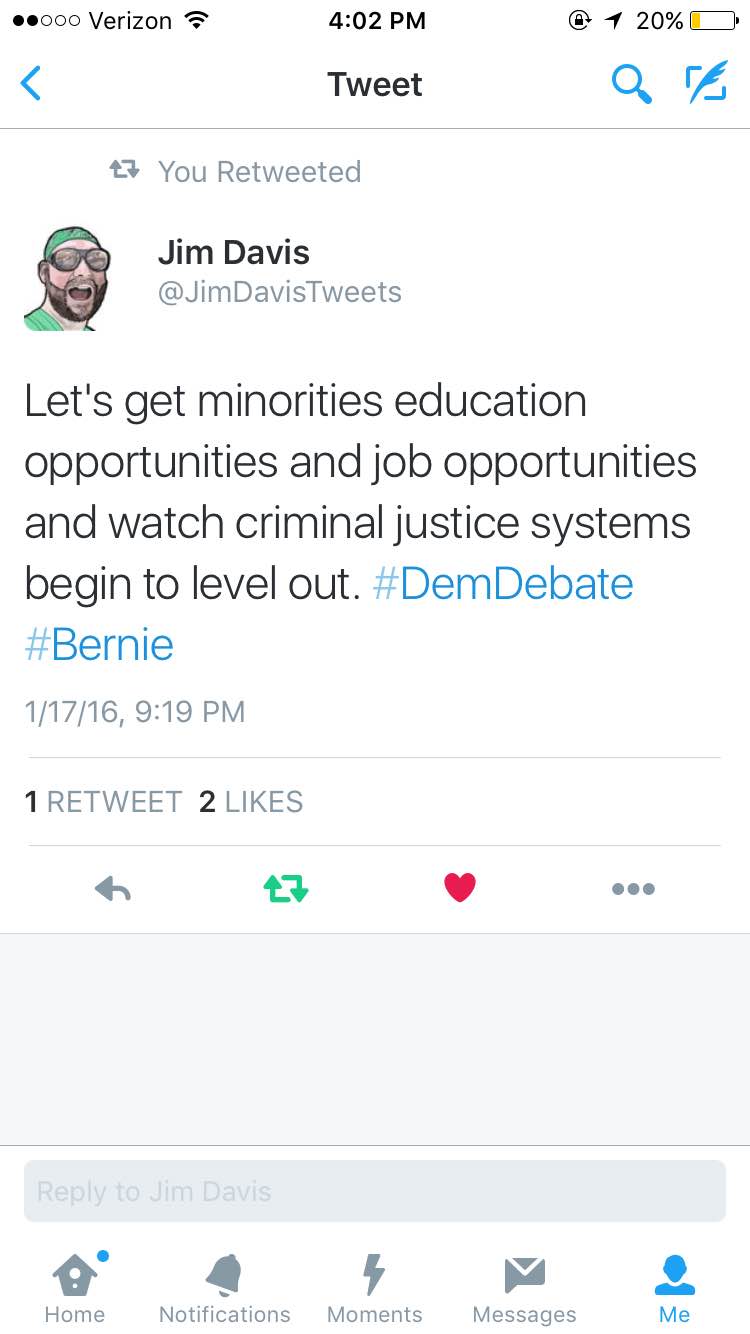
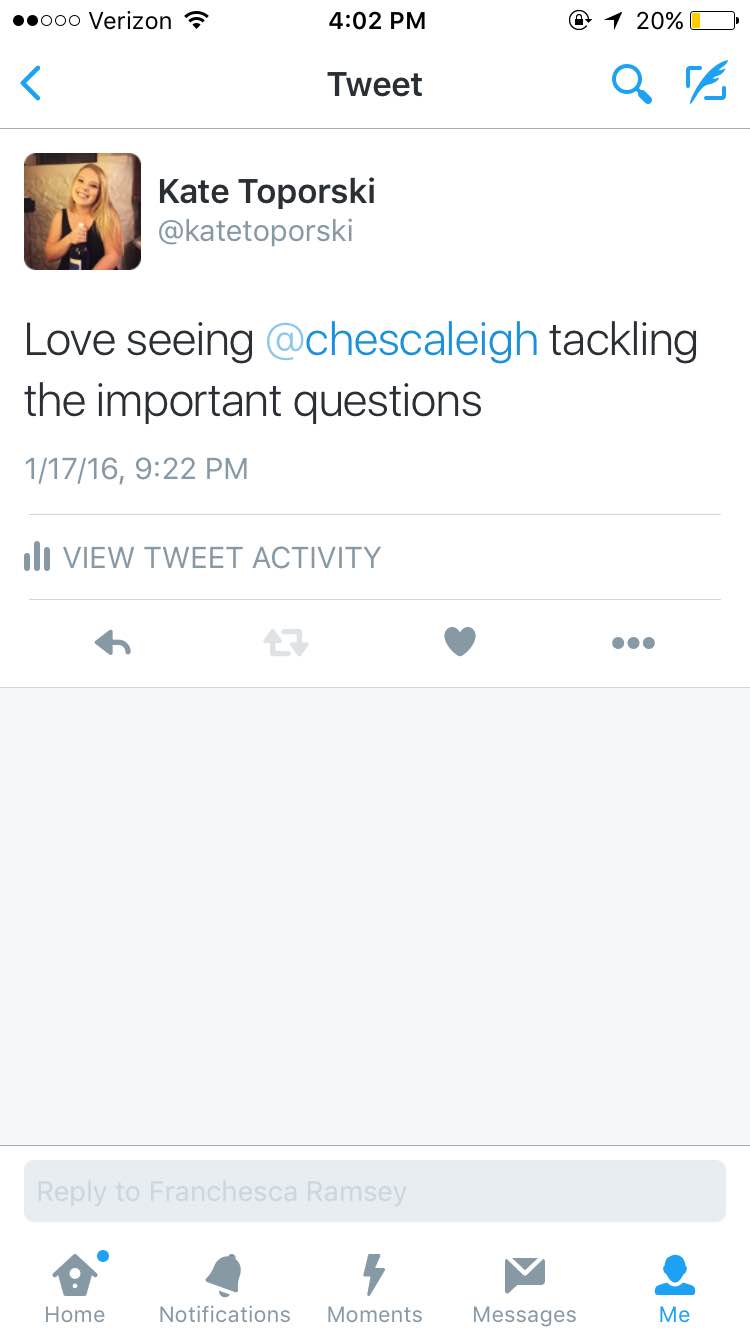
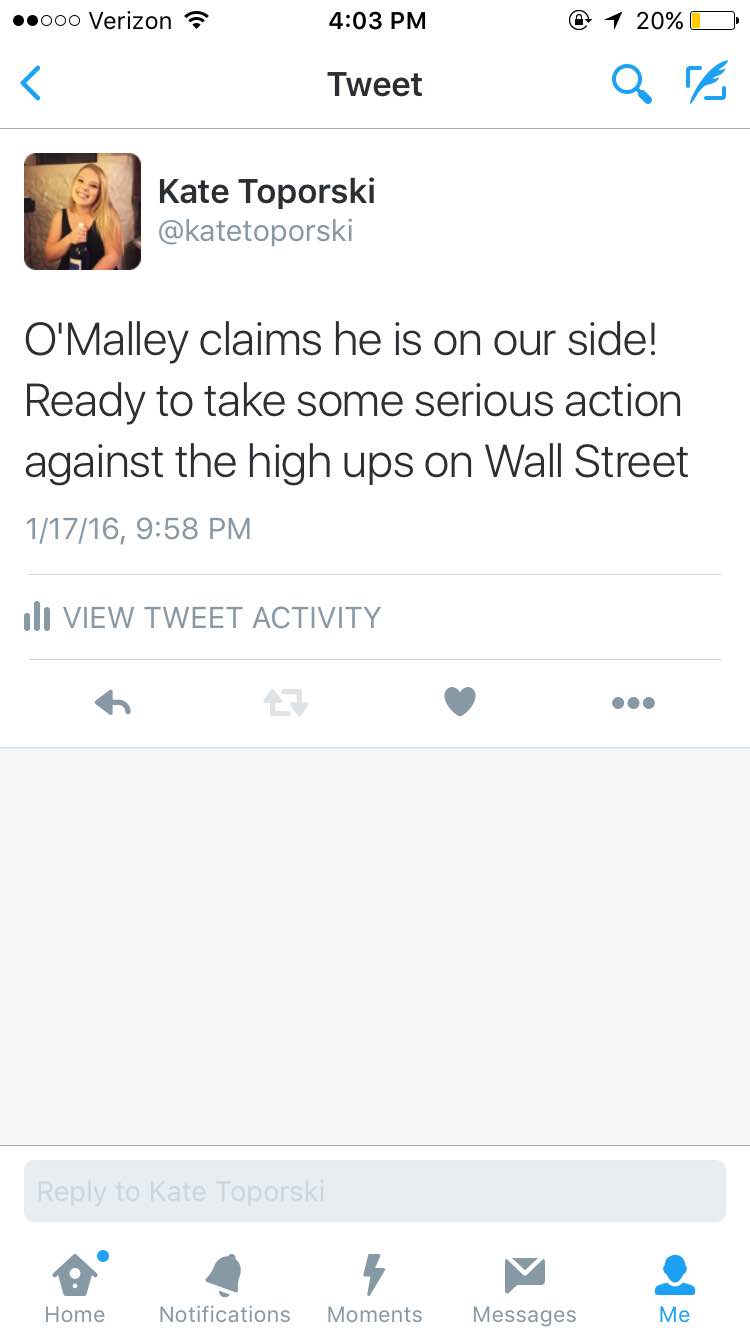
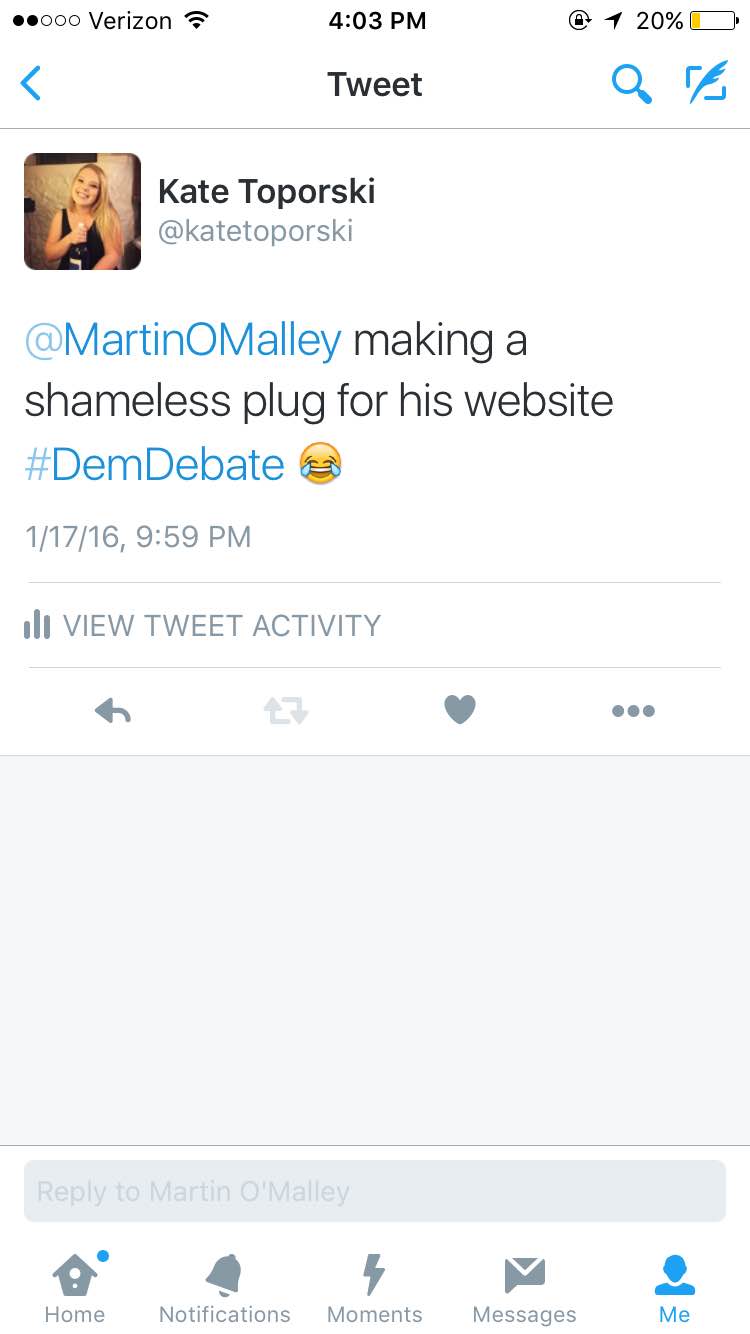
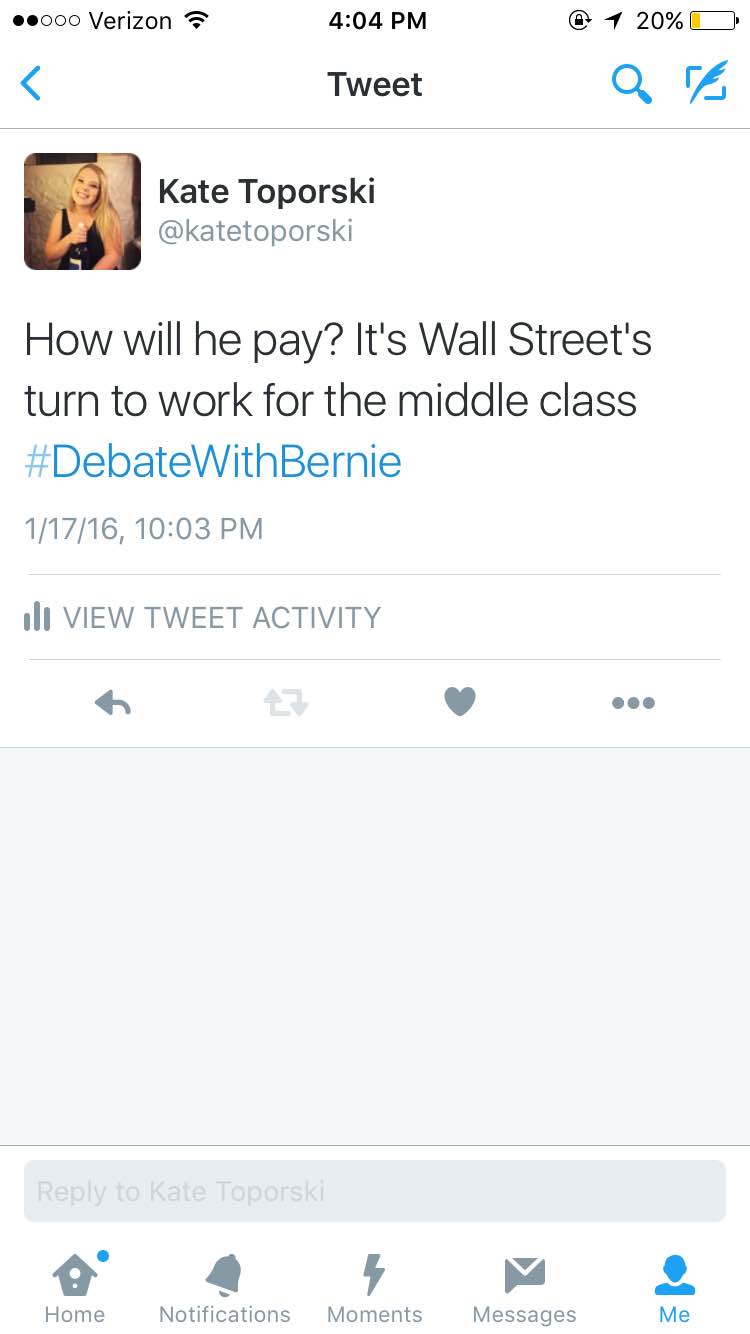
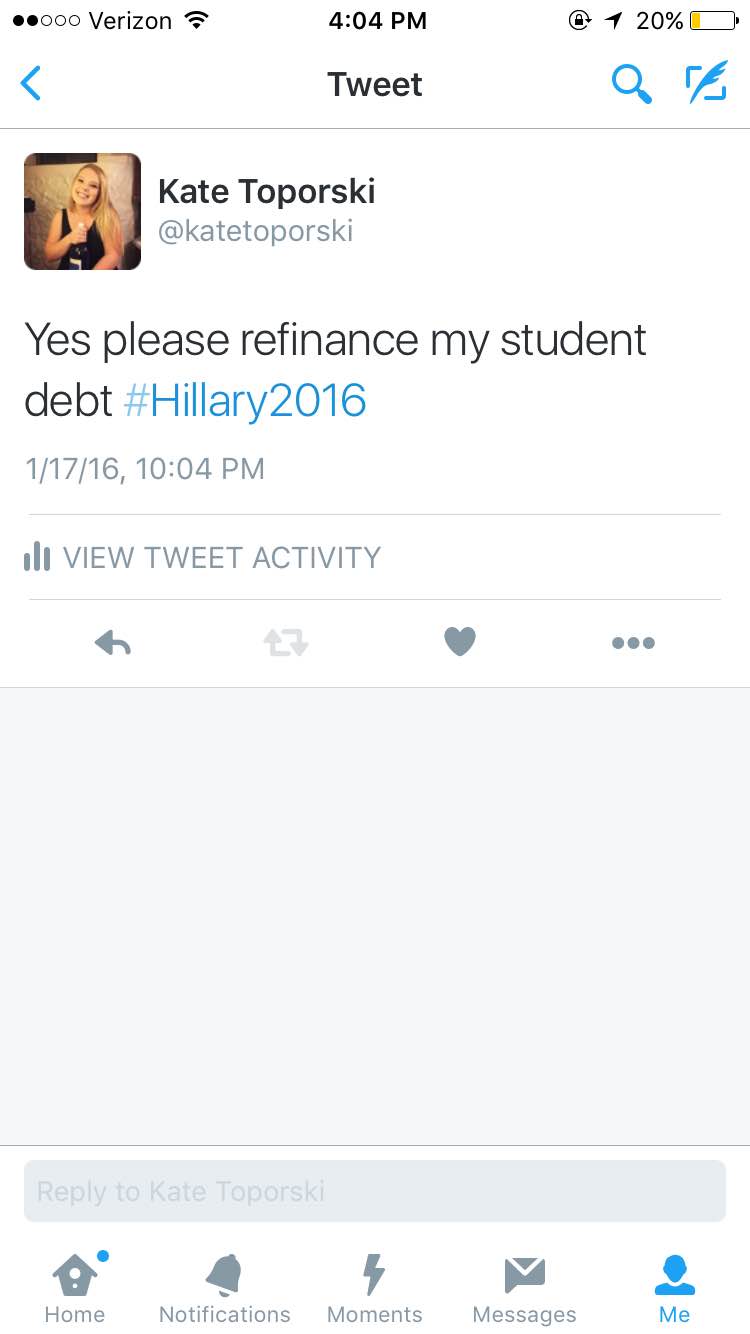
Hillary vs. Bernie vs. O’Malley? Live Tweeting the #DemDebate

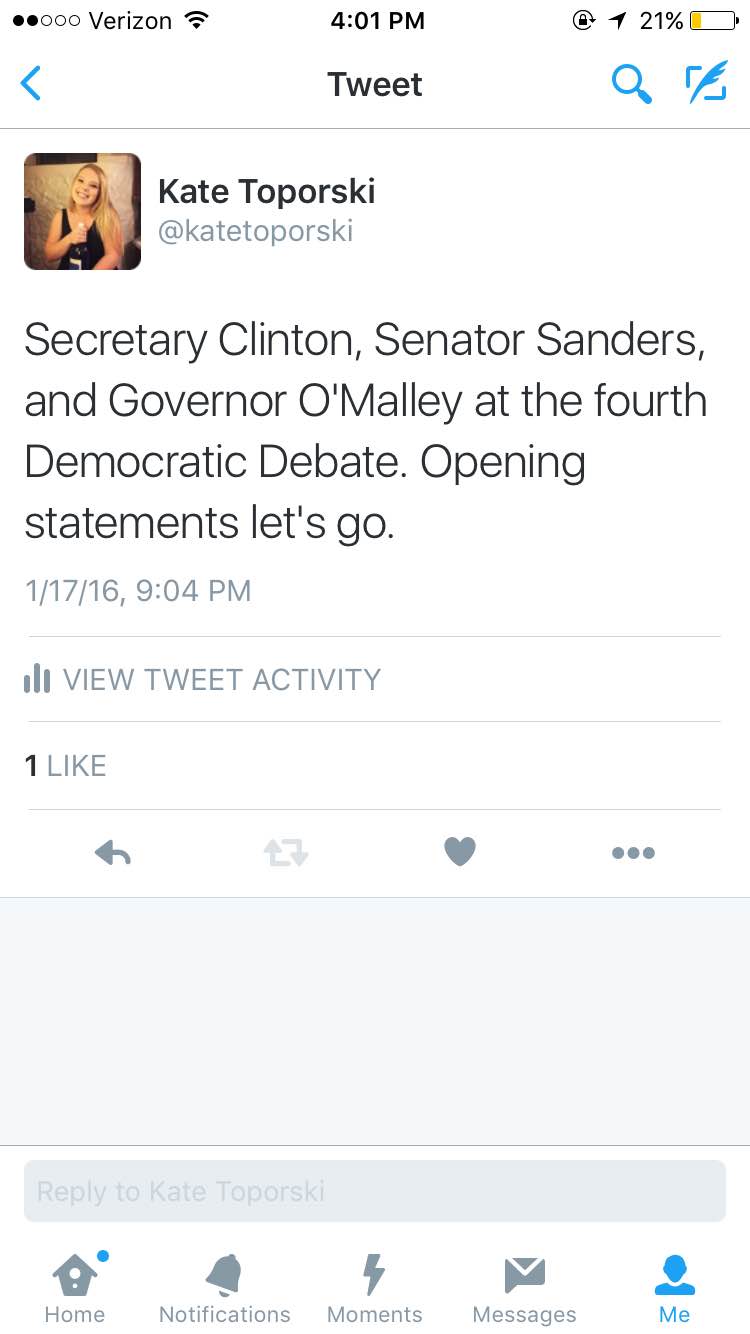
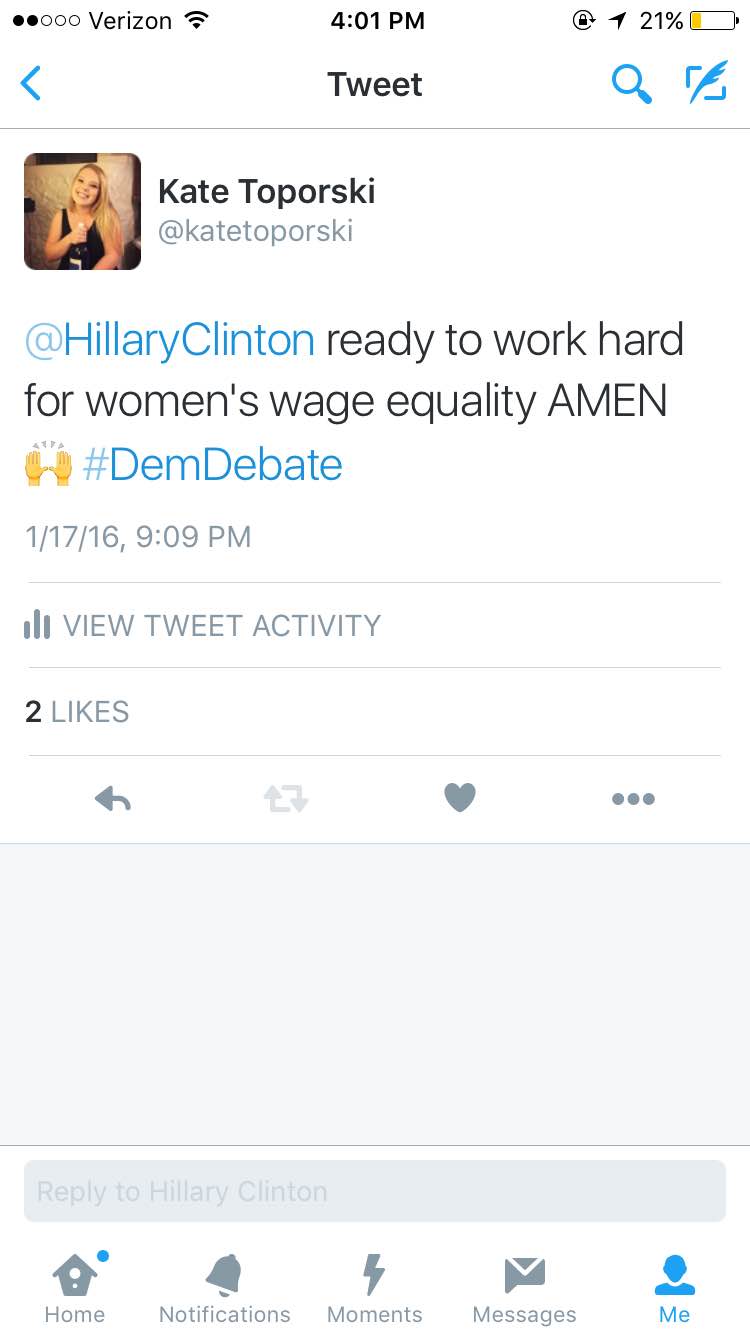
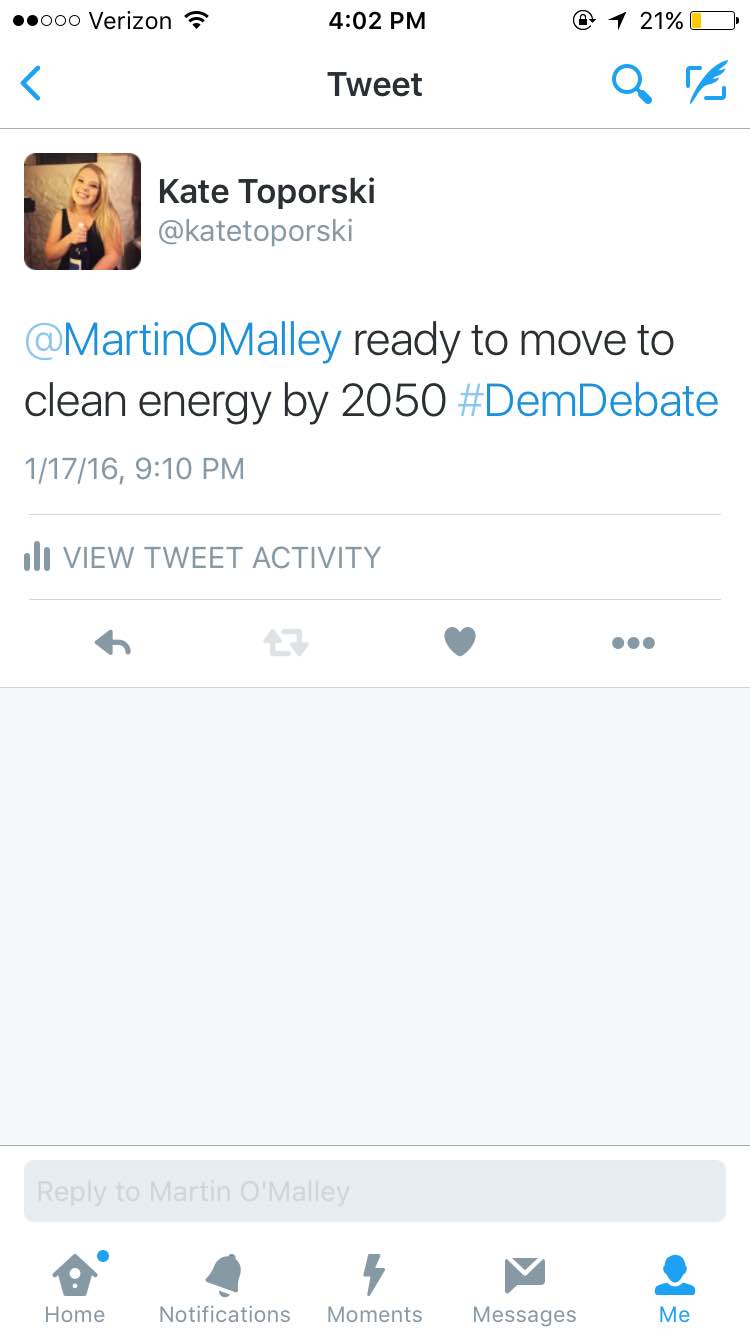
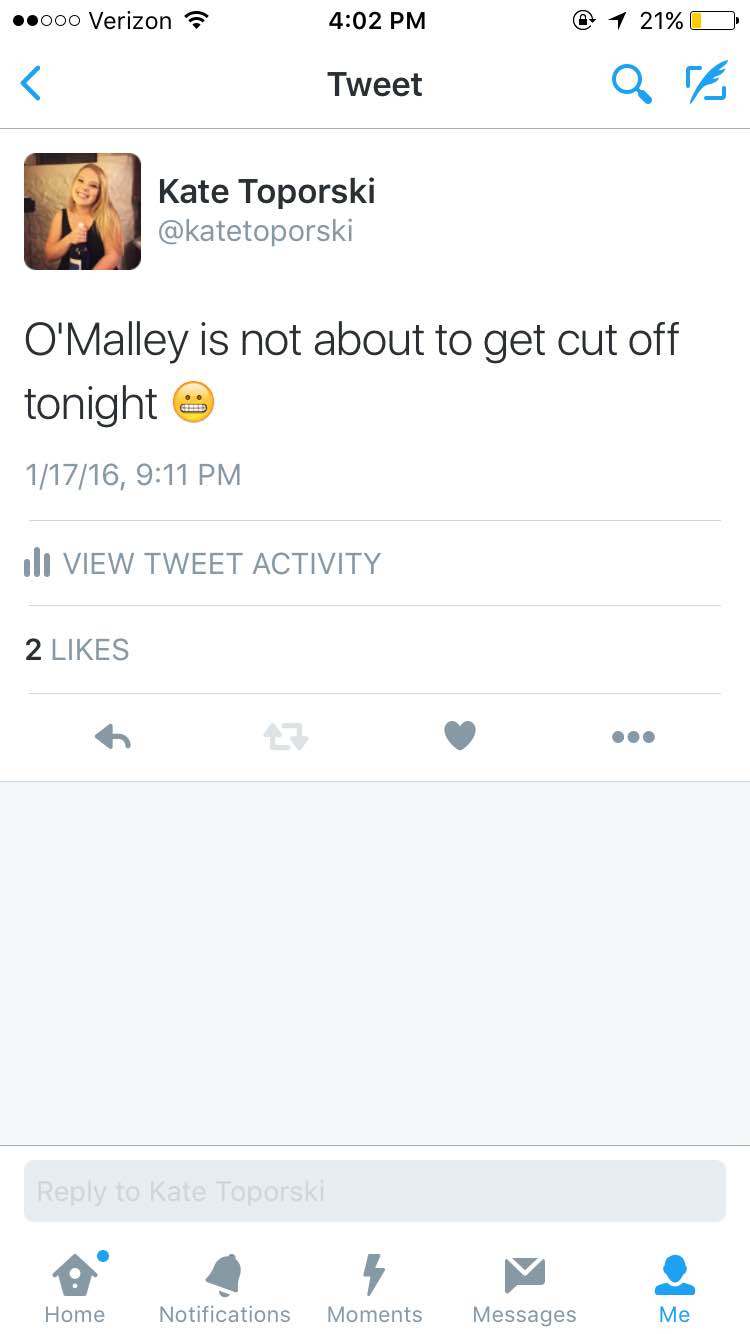
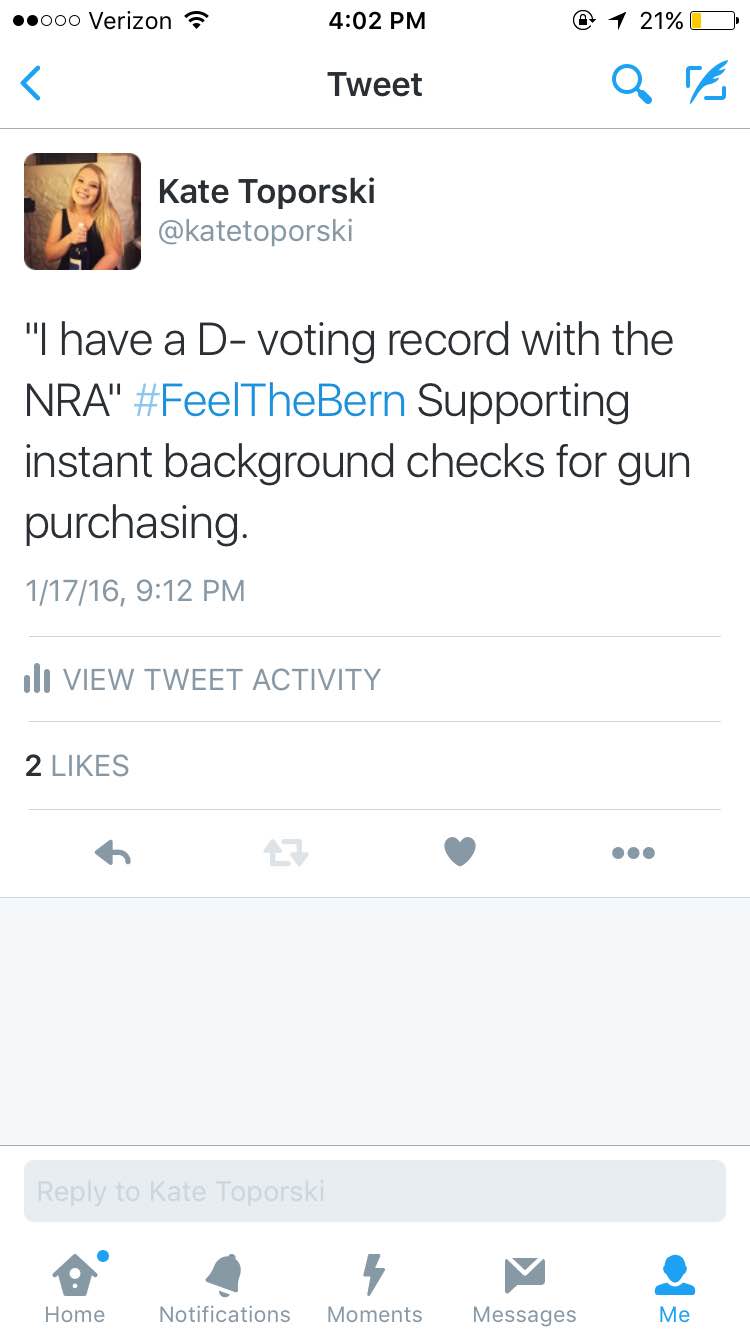
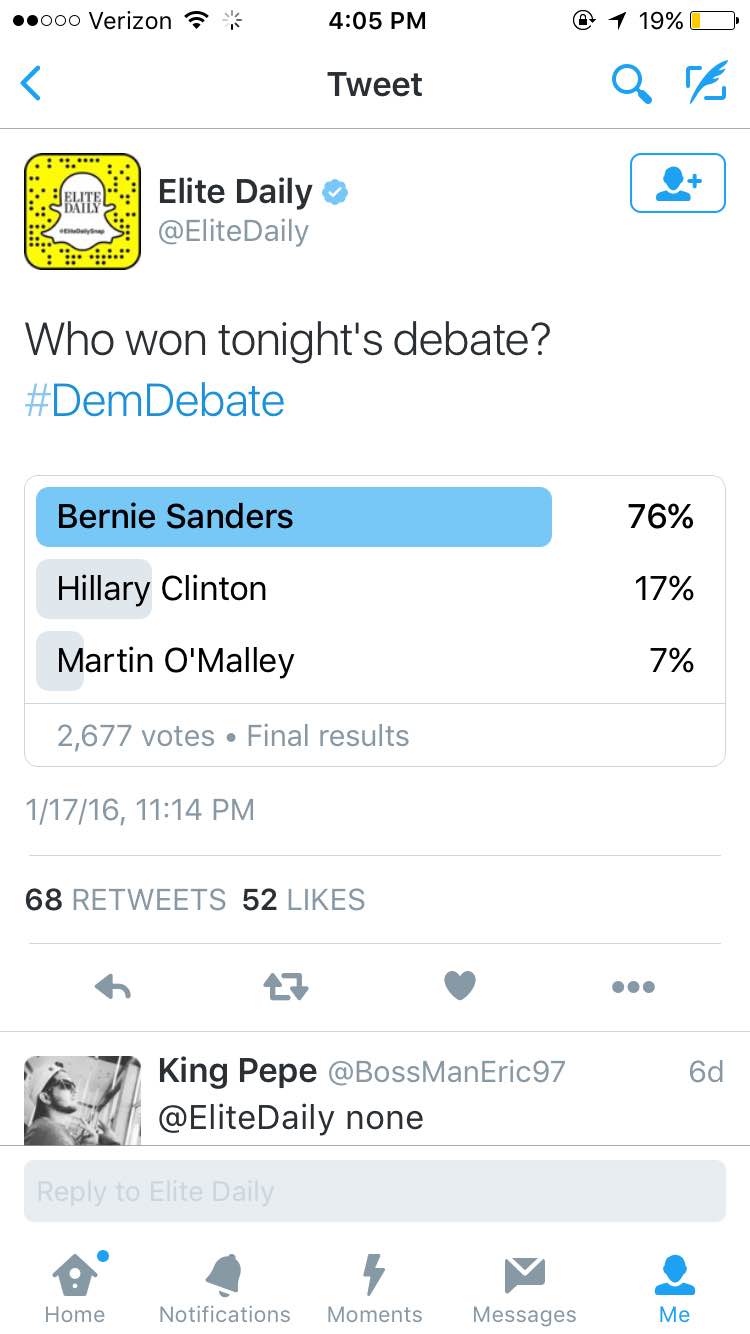
Last weekend the three candidates for the Democratic nomination went head to head in South Carolina as they had their fourth debate. Former Secretary of State Hillary Clinton, Senator Bernie Sanders, and Governor Martin O’Malley continue their race for the democratic nomination and seat at the White House with the weekend’s #DemDebate.

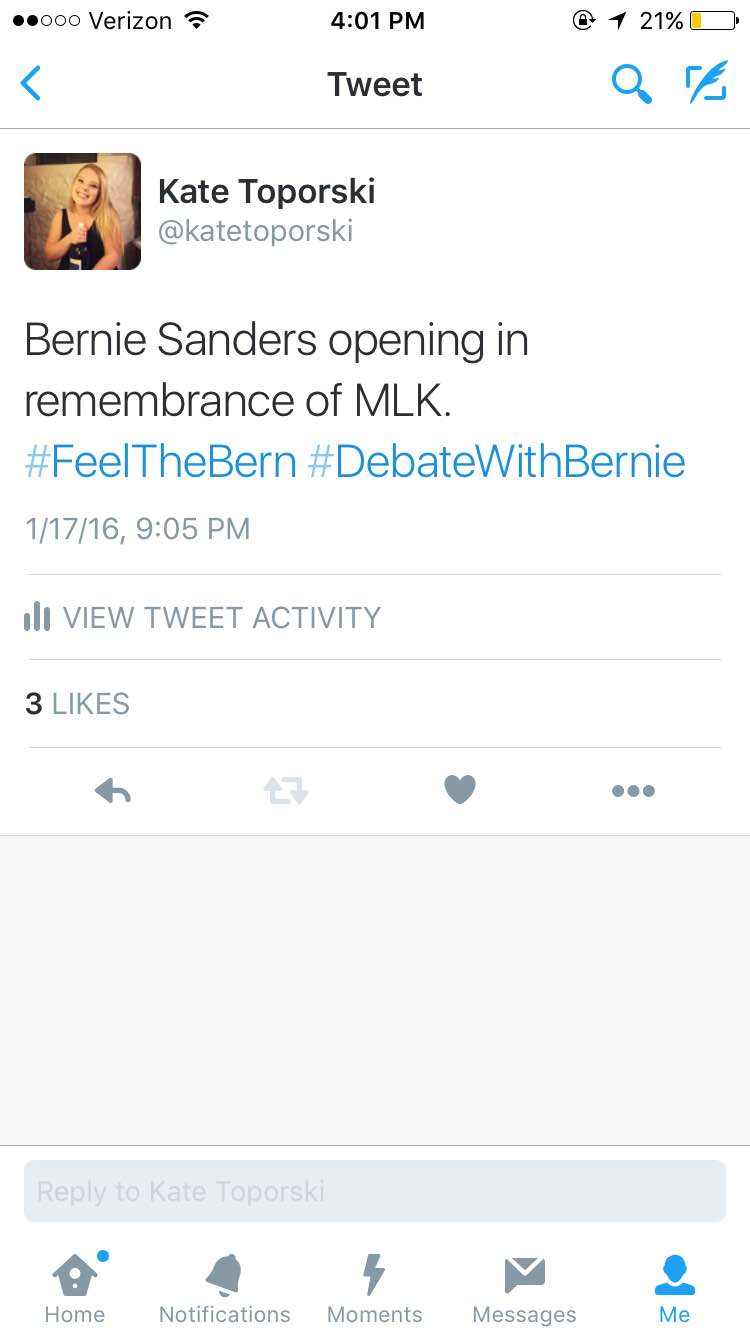
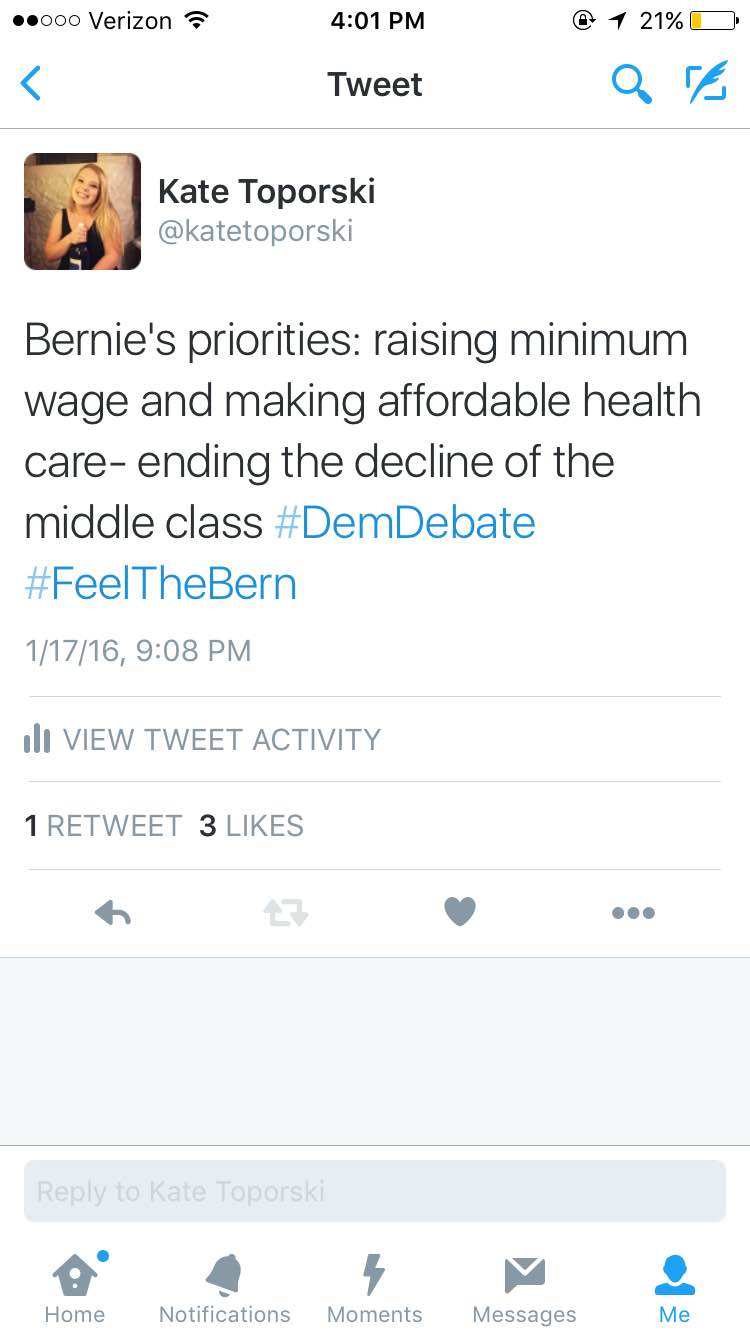
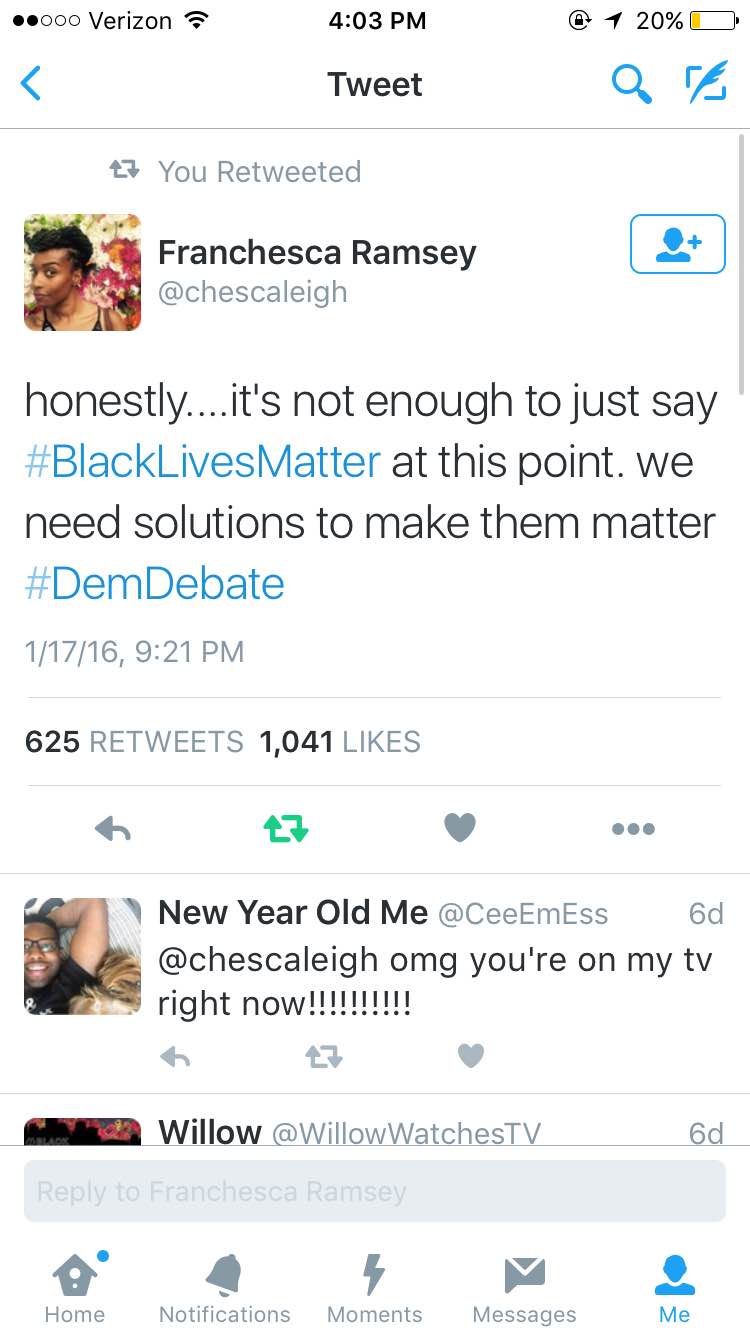
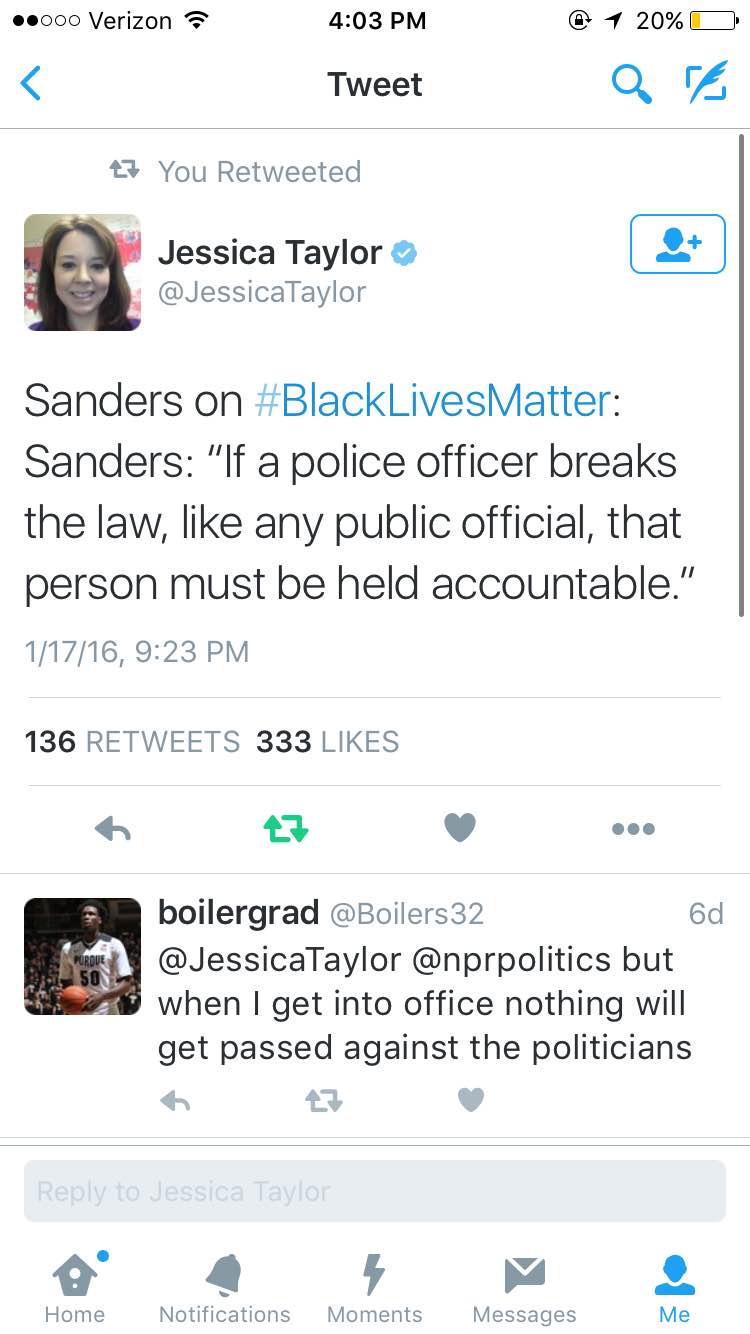
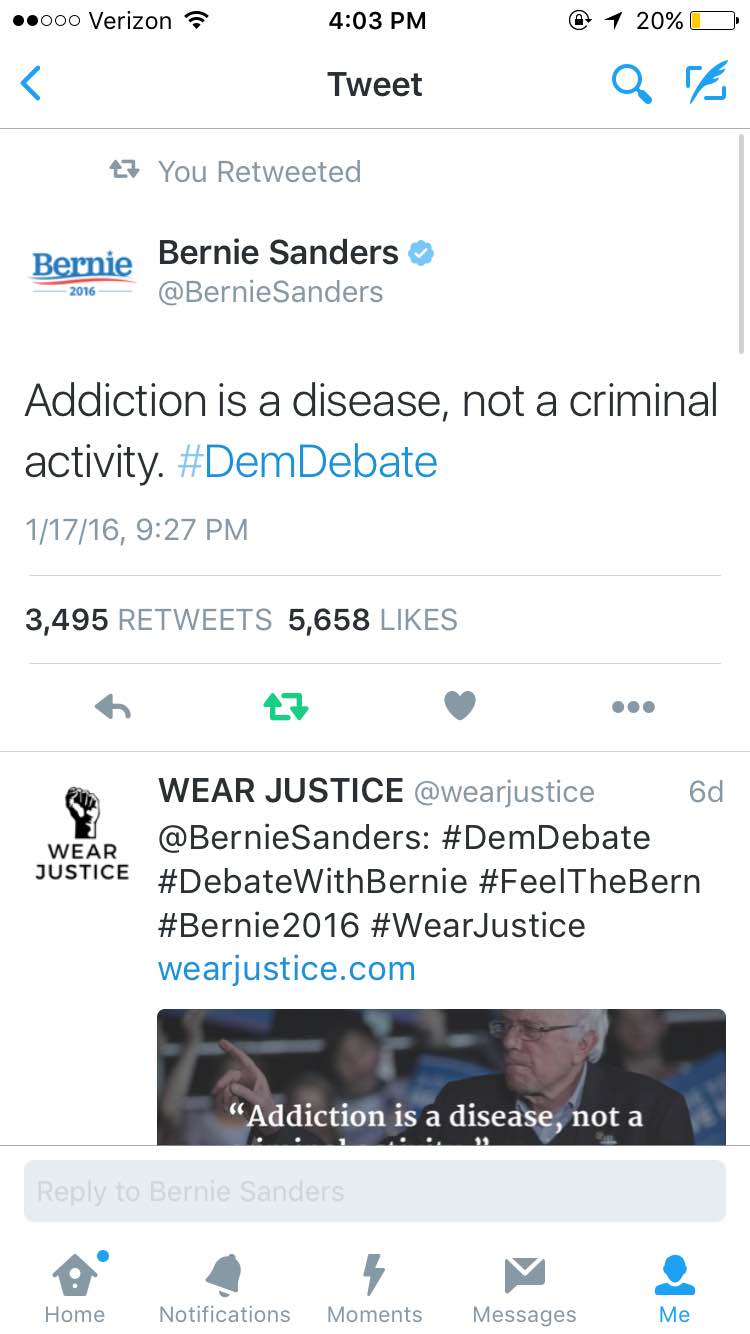
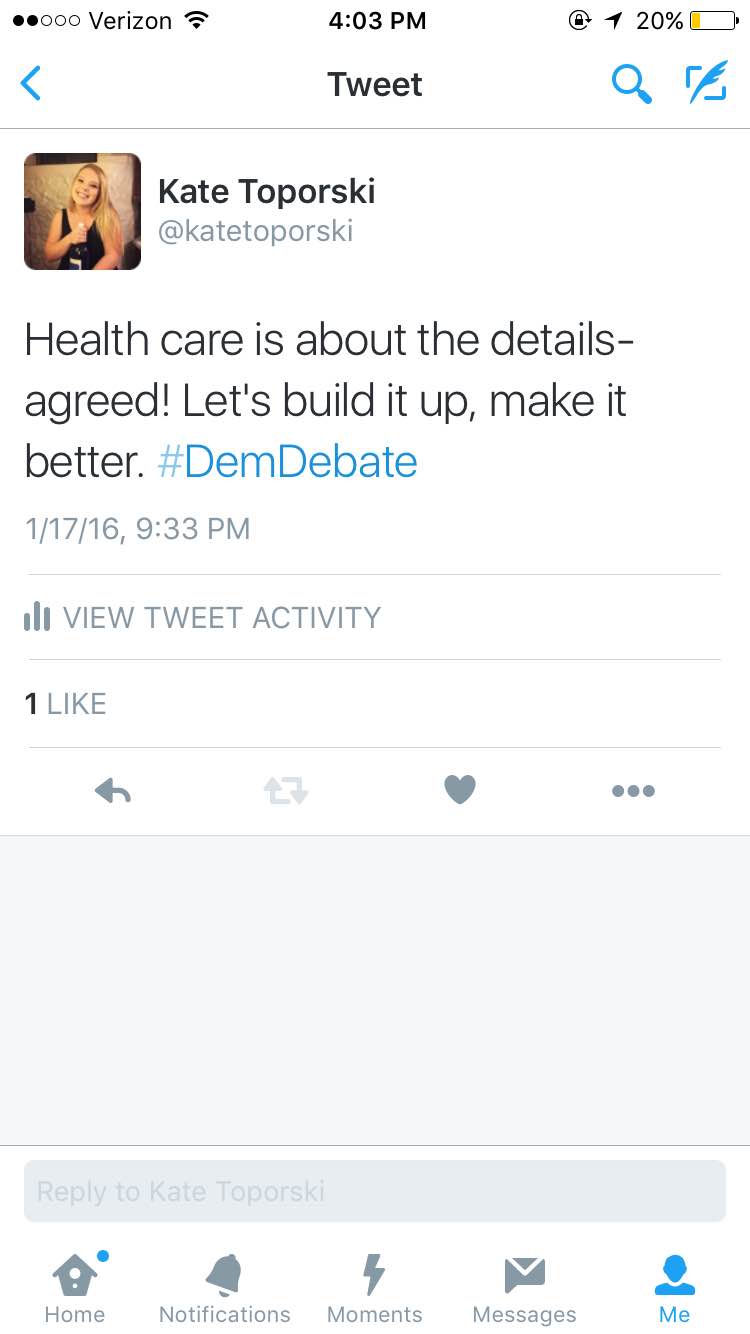
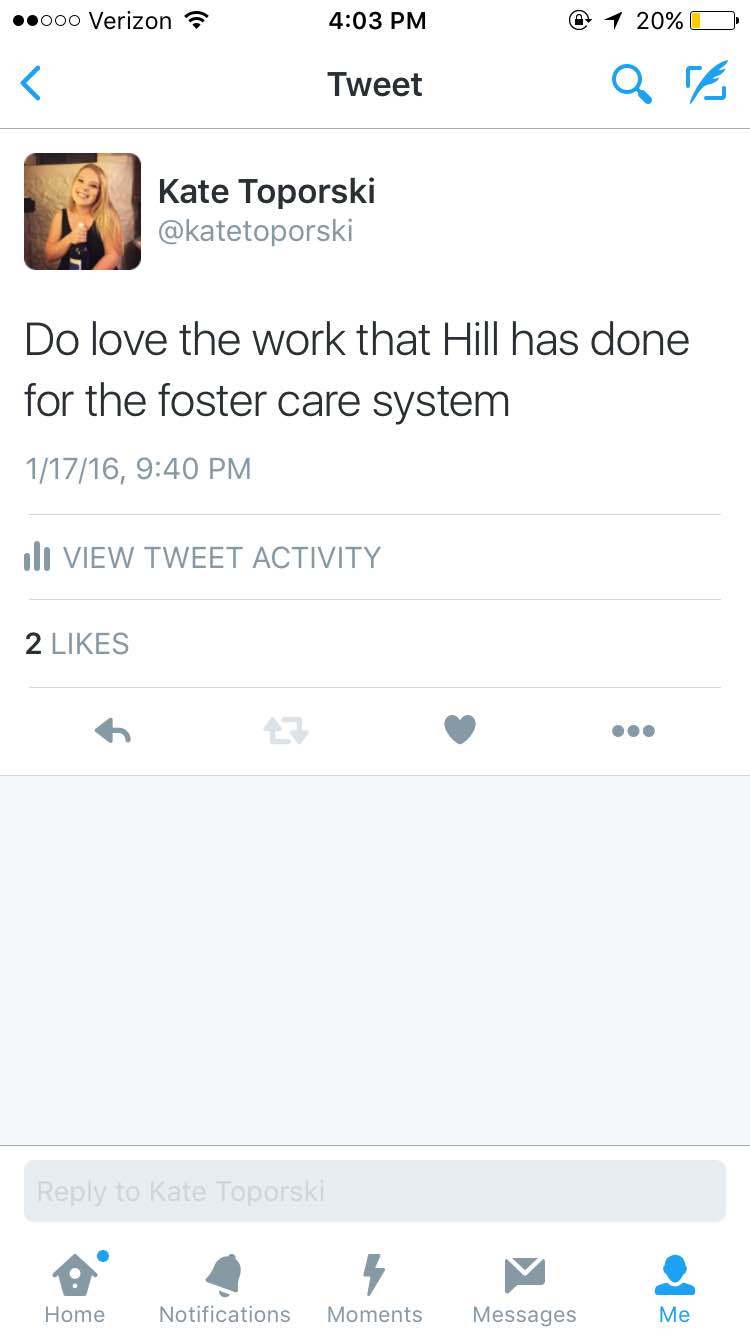
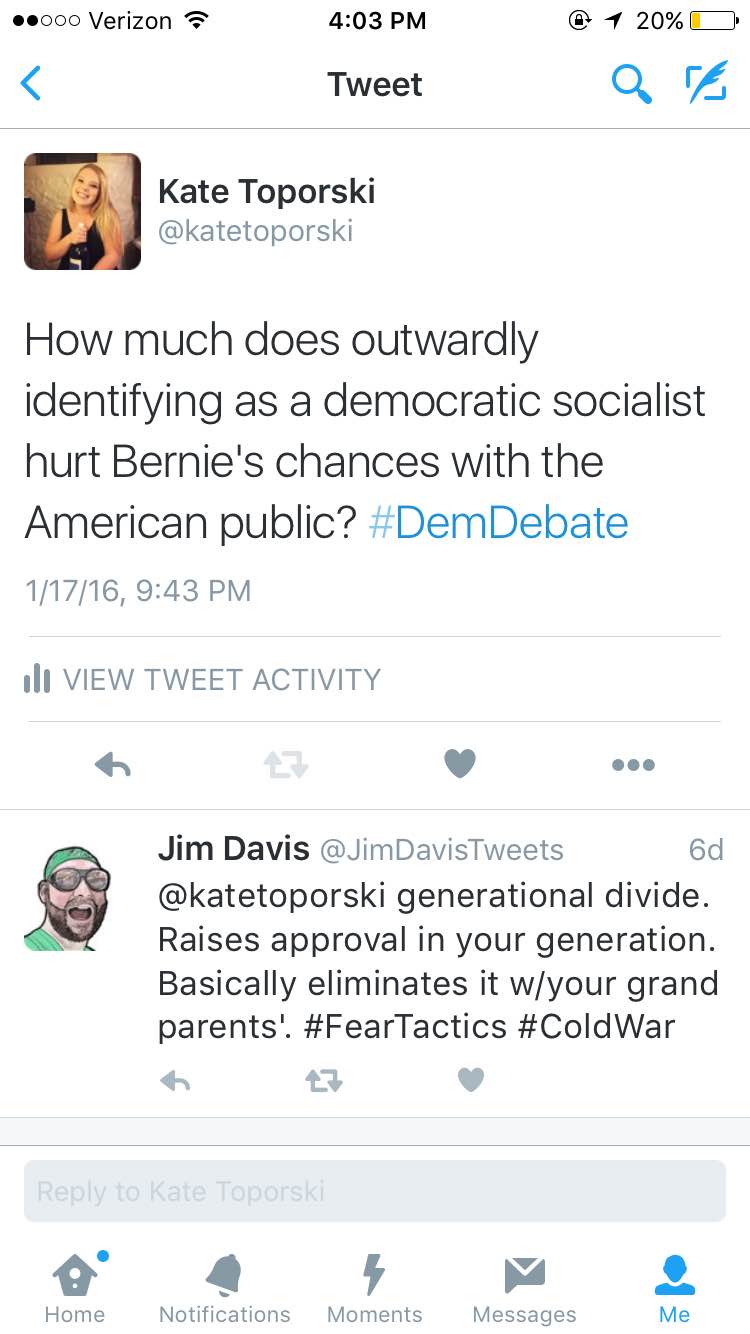
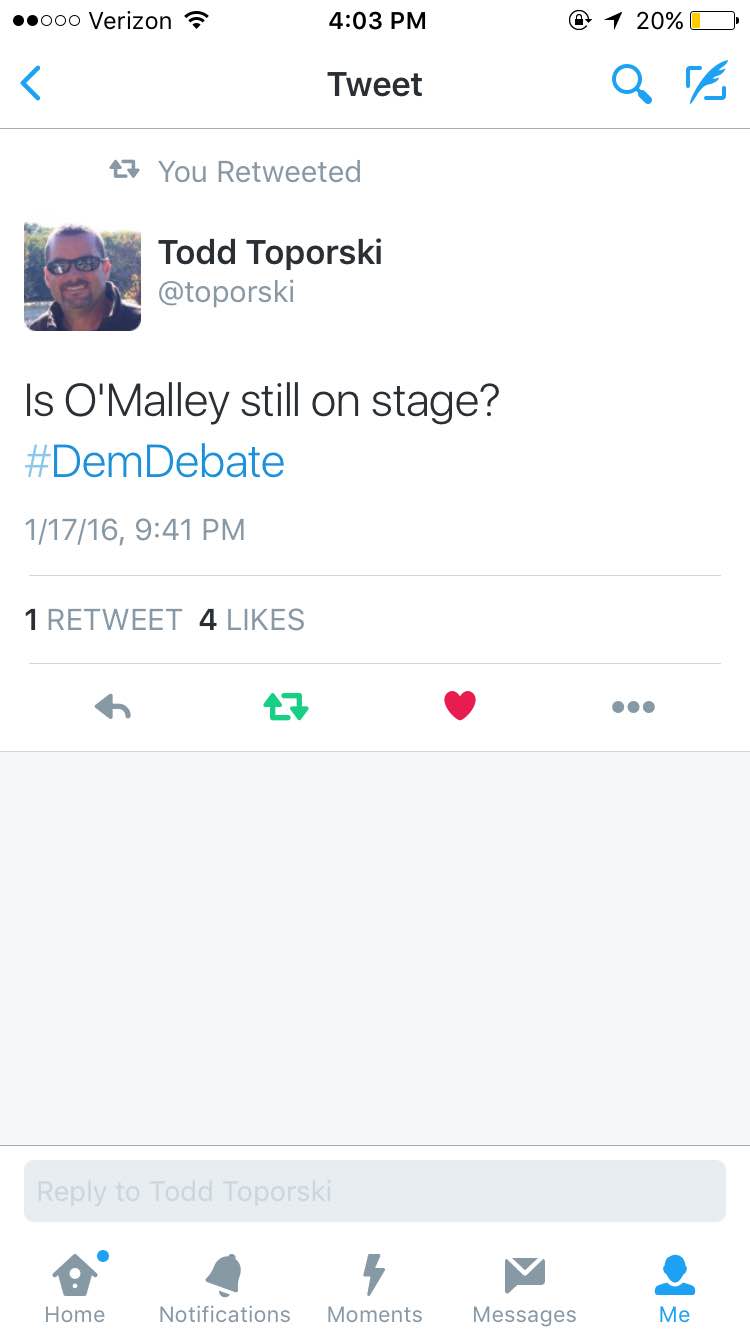
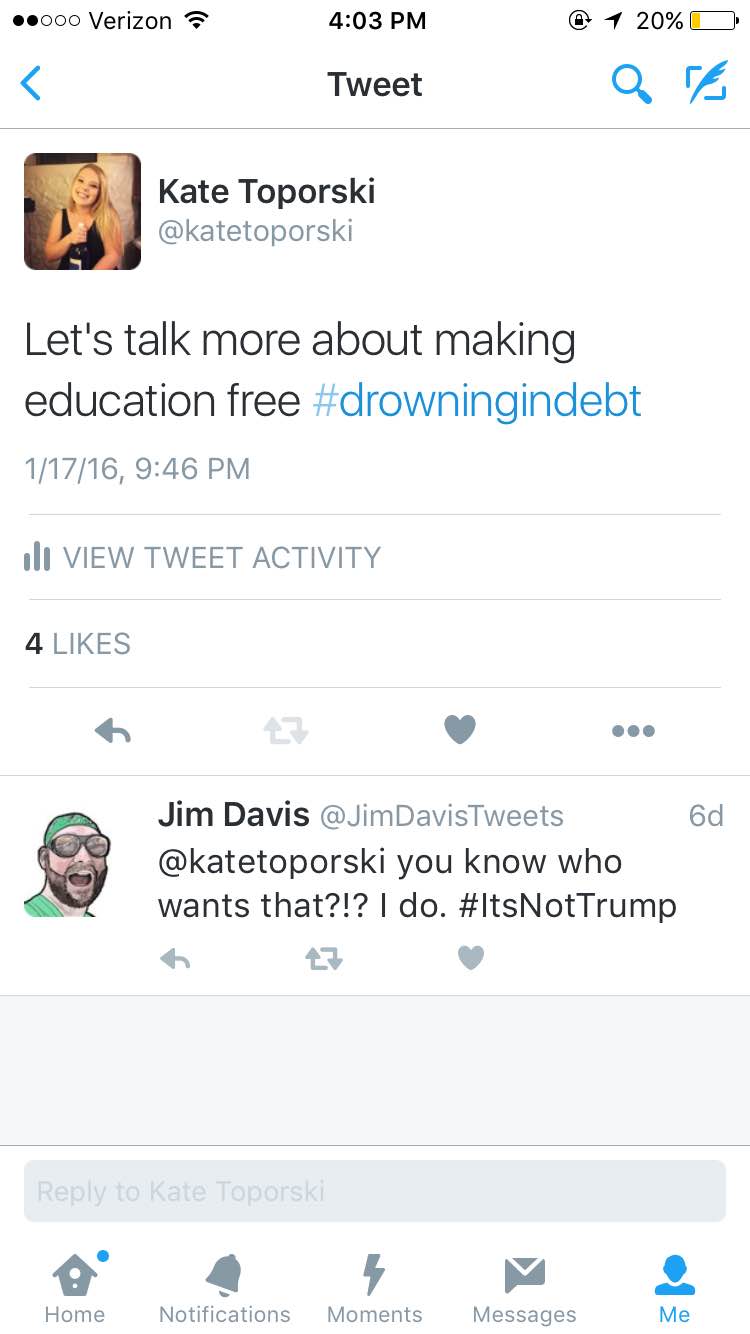
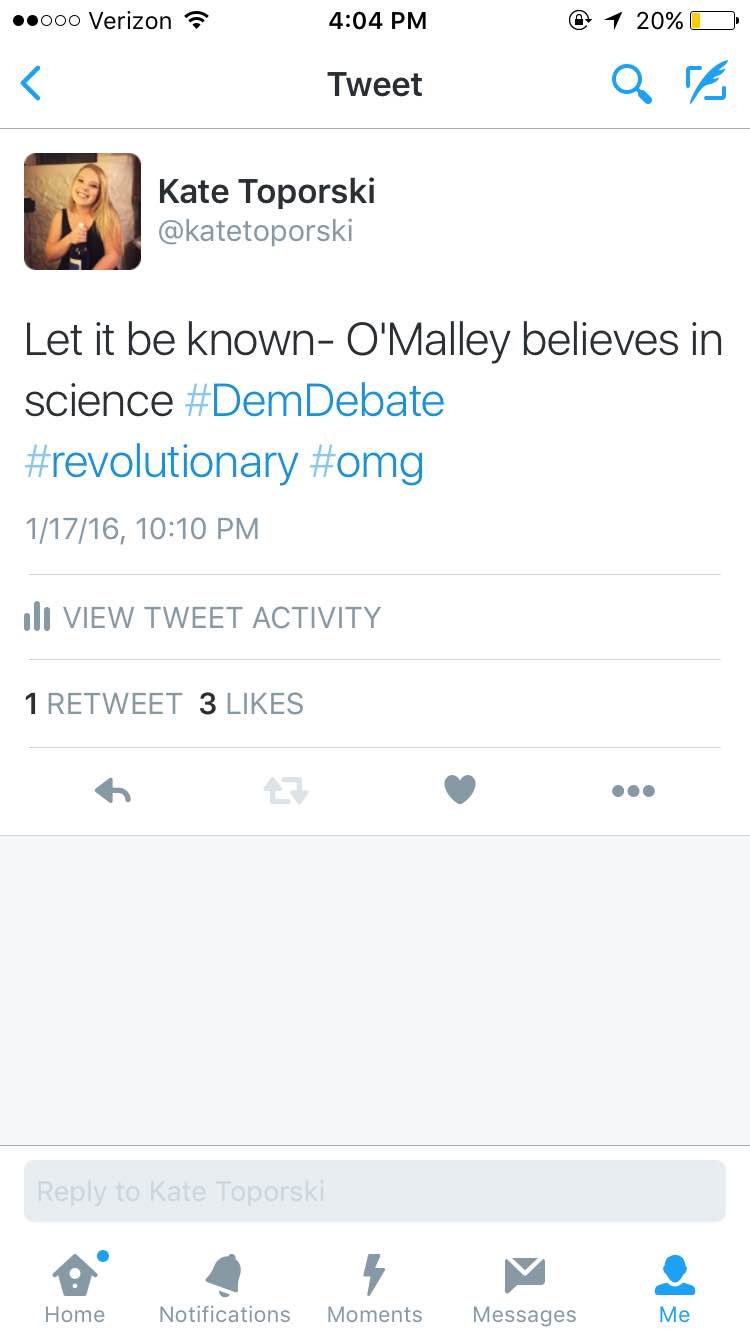
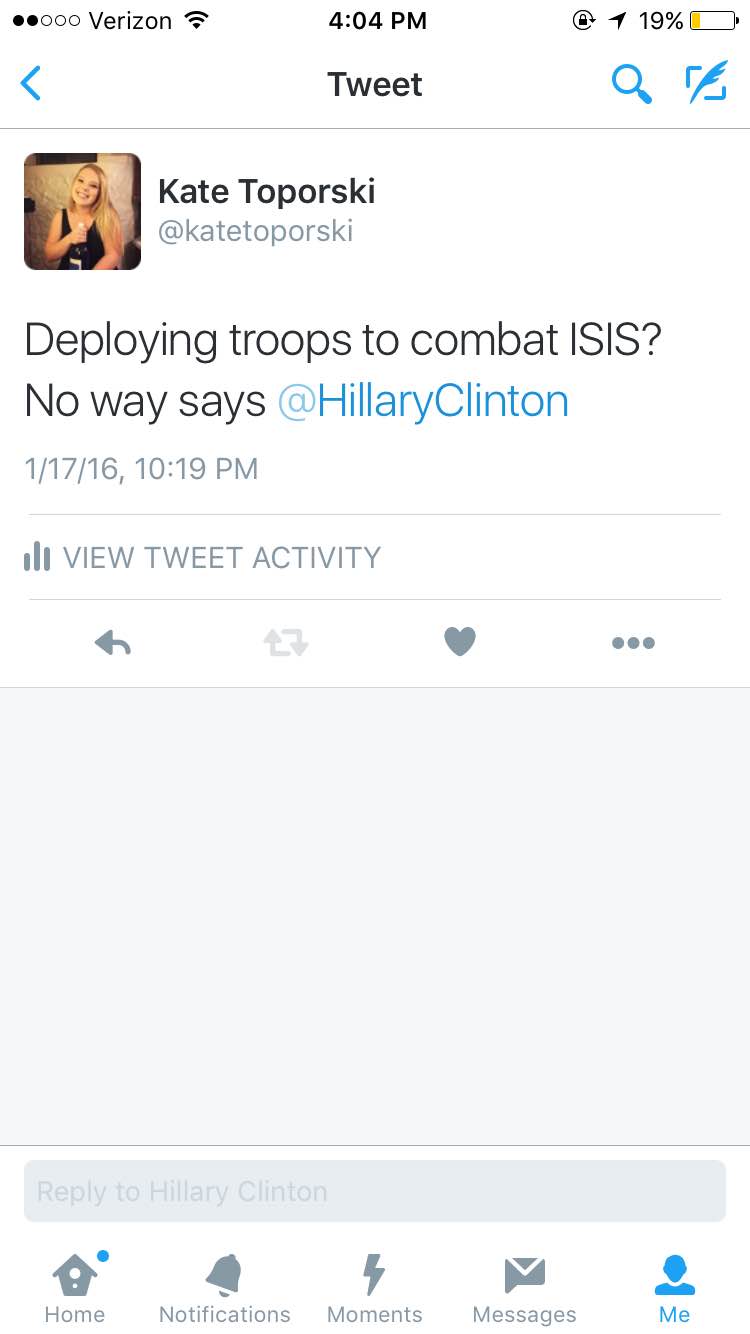
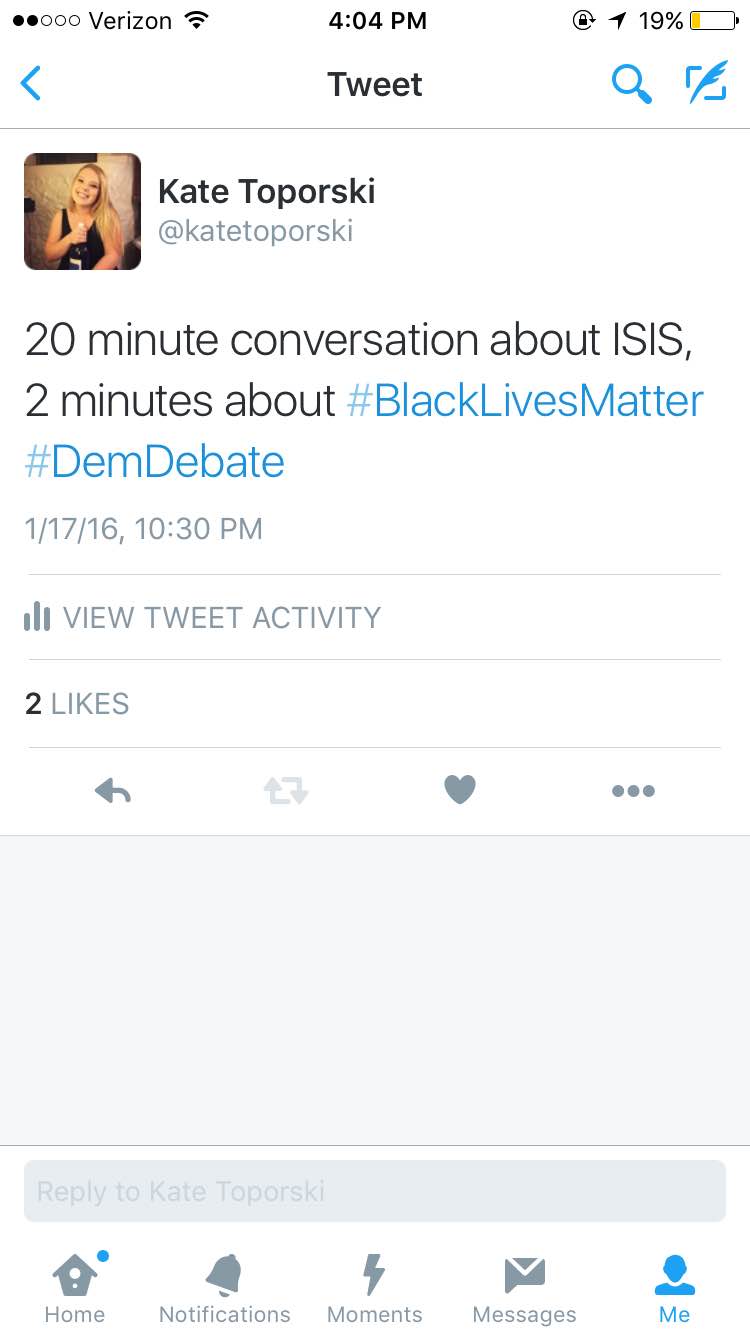
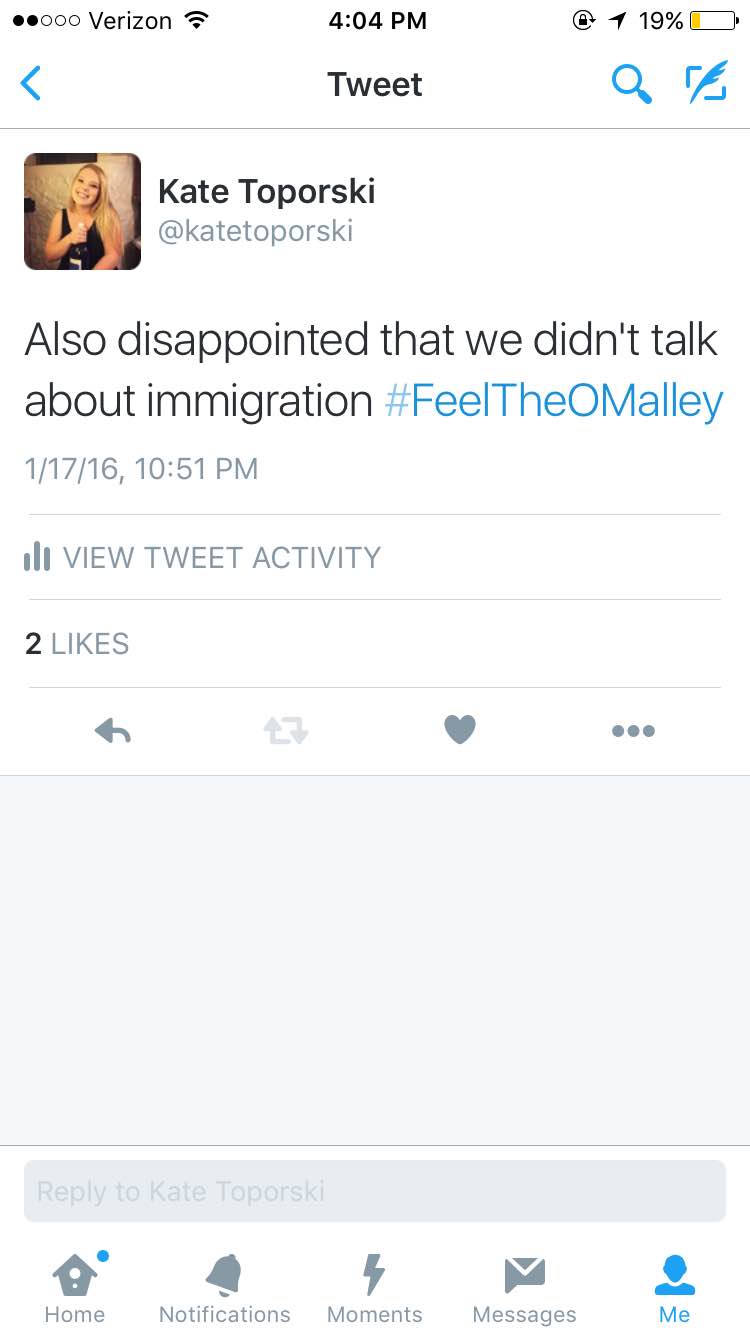
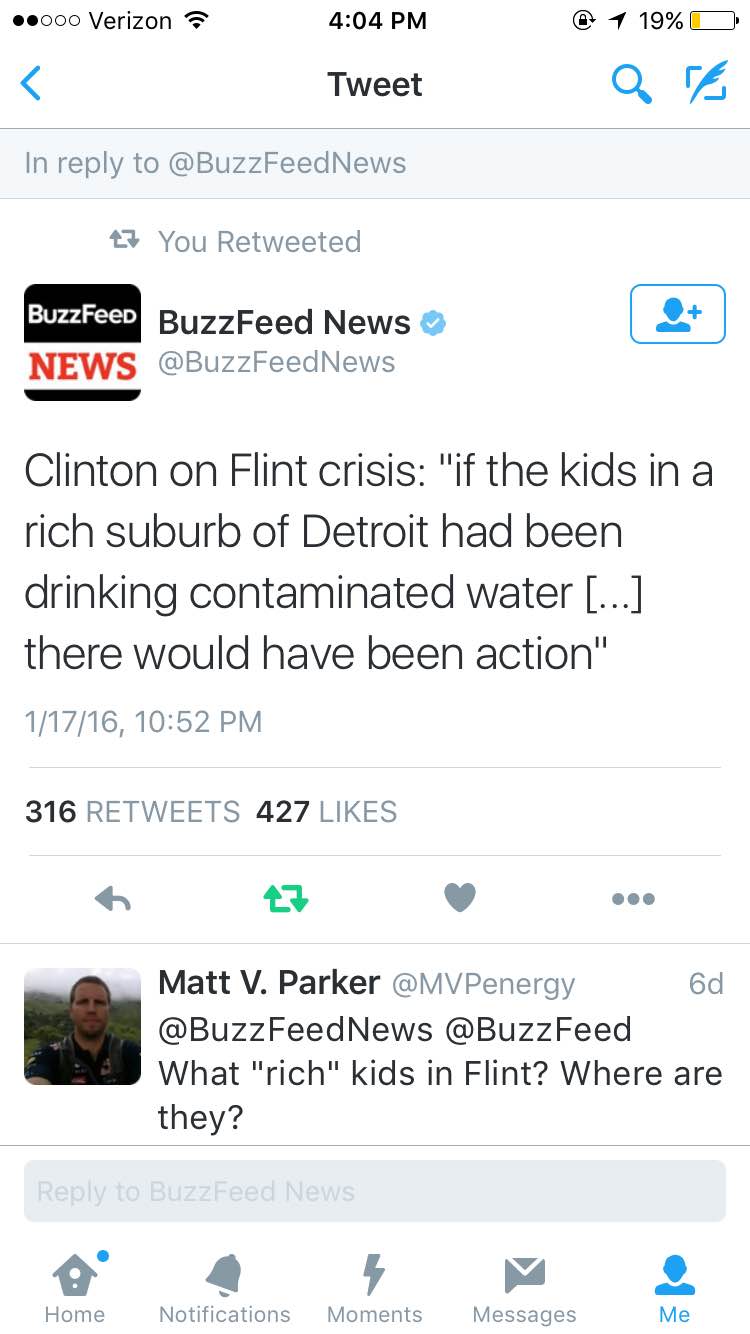
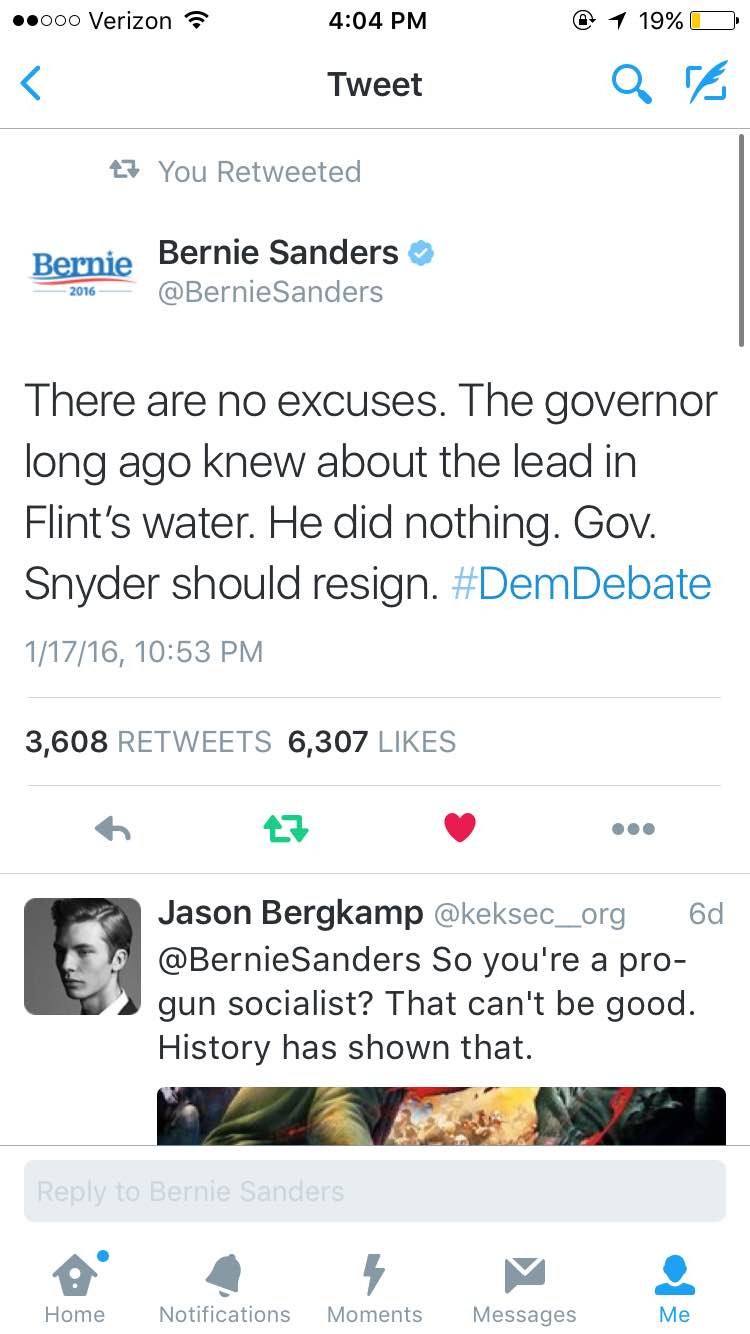
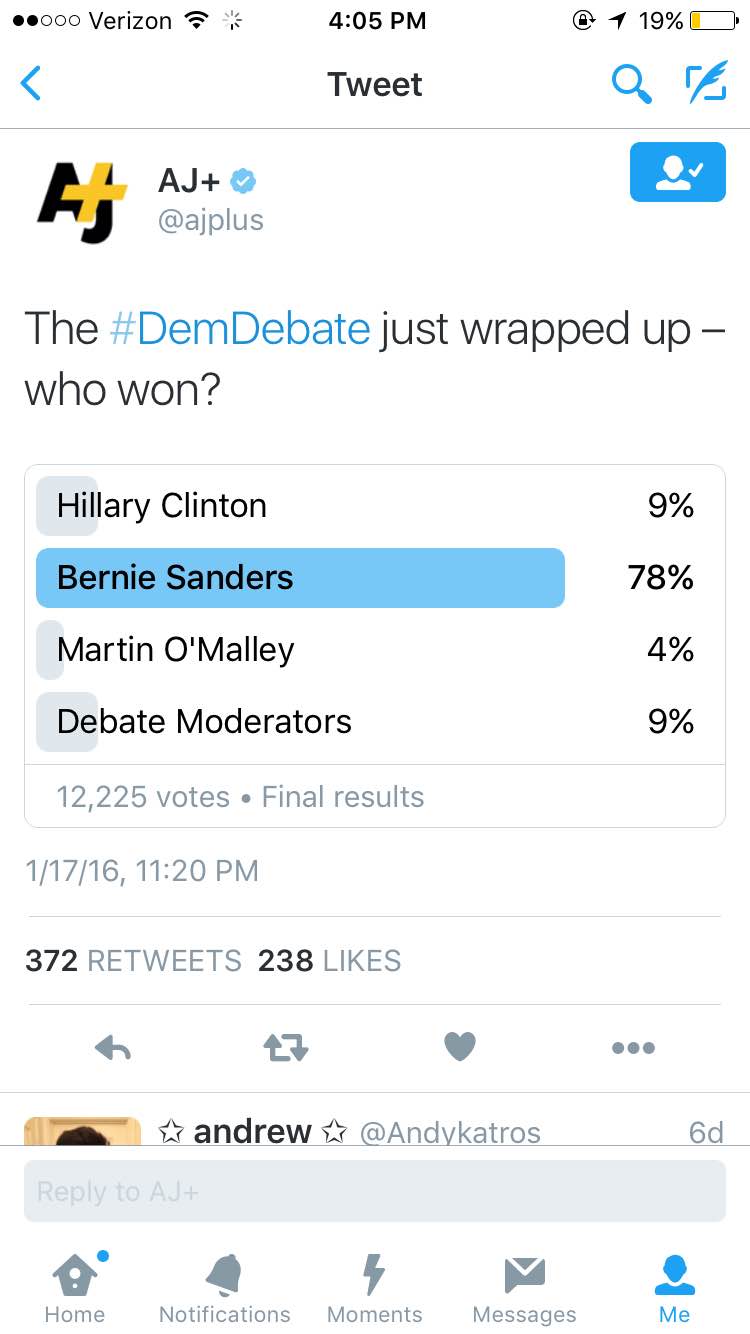
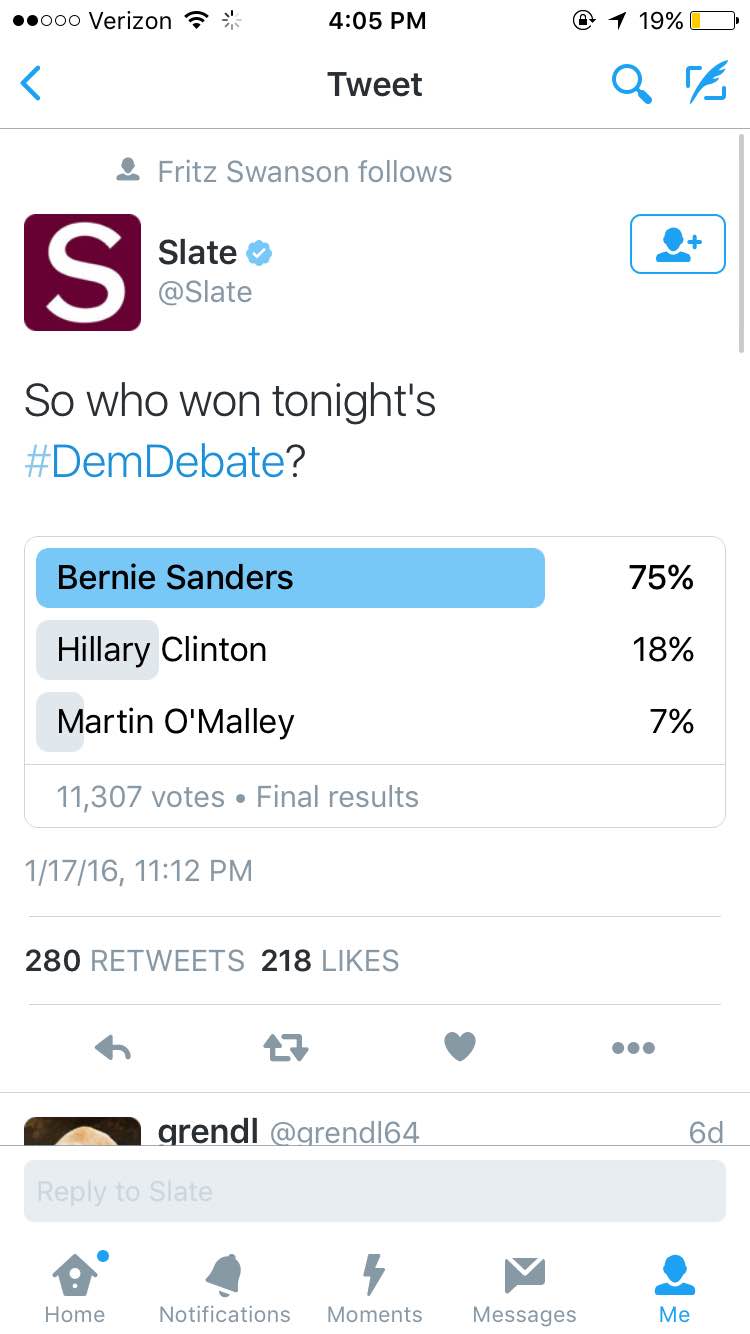
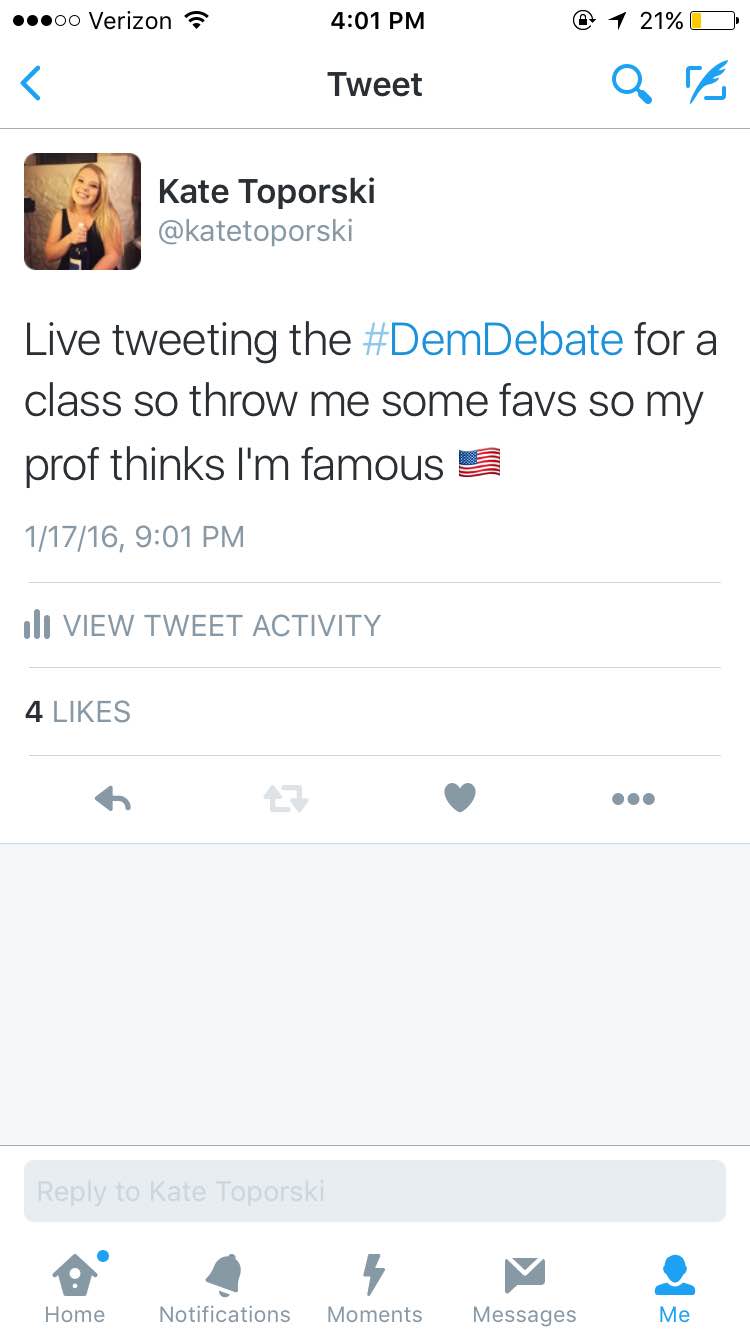
While some where able to attend the event last Sunday evening, I chose to live tweet the event from the comfort of my apartment. The experience was challenging, but brought upon interesting conversations between former classmates, high school teachers, and even my own father. Join me in my live tweets below about the awesome democratic banter from last week’s debate. Click on any tweet for a clearer read or to see the interactions beneath:

In end, we see Democratic Socialist, Bernie Sanders, as the front runner of the event. I do admit, it was impossible to stay unbiased during this live-tweeting experience. As an avid Bernie fan and a Democrat to the death, I think working on this event still would’ve proven to be better than live-tweeting something such as the #GOPDebate. It was great being able to take part in an event that does show particular interest in issues that directly affect me or my state, such as: affordable health care, free education, refinancing student loans, and of course the #FlintWaterCrisis.

Thanks for joining me for #c439 and the #DemDebate.

The Ultimate Match-Up: NYT Online or Print?

What’s Bernie saying? How the story changes from print to laptop

You’d never think that stories would differ so vastly from print to their online counterpart, but the New York Times has proven that two stories really can emerge from one. While reading the same story on two different mediums, it became clear to me that discrepancies, whether that be in form of quotes, length, or content, are apparent and real in stories that I would chose to read daily.

IMG_8710
GOP Debate

This weekend, social media and news outlets alike were flooded with #DemDebate and
#GOPDebate
 as candidates went head to head, discussing the burning issues that society is facing today. Similarly, the New York Times saw stories in and out about the debates, but one that caught my eye was Yamiche Alcindor’s piece- Sanders Health Plan Would Raise Taxes but, He Argues, Save on Costs for Care. 

Reading the article in both print and online opened my eyes to the possibility of the true difference in my medium of choice. While I often find myself scrolling through Twitter to understand what happening in the latest debate, I find that quotes and interview

IMG_8709
Democratic Debate

questions, even details are often left out for the sake of the character count. But the same could be said with print news publication. With less space than a webpage may provide, Alcindor’s article was condensed in the print version of the New York Times. This was surprising to me, as I assumed that the online version would be shortened for easy access, such as a quick read on the bus.

I saw that the print version of the story, while not leaving out significant details, simply showcased the important details by bolding them or repeating them in simple terms. For example, the print version of the story held a bolded block as shown to the right:

IMG_8711
Bolded quote in print paper.

But the online version didn’t hesitate to share multiple quotes from various campaign sources or even opposing viewpoints such as Robertson Williams, a senior fellow at the non-partisan Tax Policy Center, shown below:

Capture
Portion of article not included in print version, but included online.

It’s curious to think that opposing viewpoints are left out of a source that might be most used by an older generation. In light of the differences between digital and print news, the NY Times Innovation Report, released in July of 2014, gave a report of various improvements and success in the paper’s history. But the goal of the innovation report was to seek the future rapidly…but I’m not sure they really grasped the point…

NYT Innovation Grades:

While the Innovation Report has seemingly good planning and goals, I struggled to find a whole lot of progress in the digital realm (even though it’s been two years).

  • Creating News Bigger Than Just the Homepage/Front Page: B
    • The homepage will always be the homepage. It’s hard to get or make “big news” without it being covered on the place that is trafficked the most.
  • Making Old Stories New, and Better: B
    • This is hard, especially if it’s not something about a widespread event, holiday, or emotional remembrance in America.
  • IMG_8706
    “Quiz” page on the NY Times website.

    BuzzFeed Quiz, More like NYT Quiz: C-

  • Let’s Get Personal: B
    • It’s easy to search for the things I want rather than searching through the entire site. In the print paper…not so much. I was too embarrassed to post the picture of me struggling to fold the paper back in its original manner.
  • I Want to  Follow You (Not In A Creepy Way): C+
    • You can subscribe to the NYT in a variety of ways, but for concise news, I’d suggest the Skimm. It’s not easy to get news about the things you care about delivered to your inbox on the daily.
  • Be More Social  (Media): A-
    IMG_8704
    One of many tweets of Yachime’s during the #DemDebate.
    • In my referenced article, reporter Yamiche Alcindor was tearing up Twitter
      about the topic before the piece was even published. I like seeing reporters on top of their game, and I love the NY Times Twitter.

The struggle is real when it comes to consistency in the news, but it shouldn’t be that when within the same news outlet. I’d like to challenge the New York Times to stay on their path of reporting on and off the web, especially when it comes to reporting opposing opinions and theories.

See you on Sunday with live tweets from the #DemDebate.

Create your own website, free on WordPress.com.Create your own website.
Start free